




What's Happening?
A Florida police officer has been placed on paid administrative leave following a deadly crash that killed two people. The officer had encountered two brothers arguing on a sidewalk, with their vehicle blocking a traffic lane, and observed indications
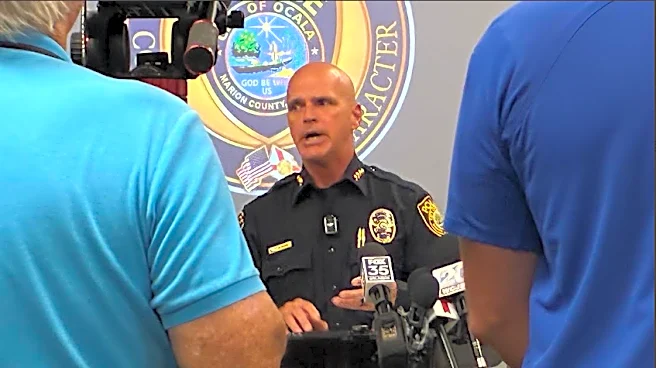
that they may have been impaired. Despite these signs, the officer did not investigate a possible DUI or assess their level of impairment, allowing them to leave. Minutes later, the brothers were involved in a two-vehicle crash at the intersection of SE Maricamp Road and SE 36th Avenue in Ocala. The crash resulted in the deaths of a 50-year-old woman and her 31-year-old son, who were in a black Mazda SUV. The brothers, aged 33 and 24, were in a dark red Dodge minivan and were taken to the hospital, with the older brother, who was driving, in critical condition. Ocala Police Chief Mike Balken has ordered an internal affairs investigation into potential policy violations. The primary officer involved is described as being new to the agency, having been out of field training for approximately 30 days. Two other officers, including a sergeant, responded to the initial scene but were reportedly unaware of the signs of impairment observed by the first officer.
Why It's Important?
This incident highlights critical issues regarding law enforcement protocols, public safety, and accountability in handling suspected impaired drivers. The decision by a police officer to allow individuals showing signs of impairment to leave a scene, subsequently leading to a fatal accident, raises serious questions about training, judgment, and adherence to established procedures. For the public, it underscores the potential dangers when law enforcement fails to intervene effectively in situations involving impaired driving, leading to tragic and preventable loss of life. For law enforcement agencies, it emphasizes the need for rigorous training, clear guidelines, and consistent enforcement of DUI protocols, especially for new officers. The internal affairs investigation will scrutinize whether departmental policies were followed and if there were systemic failures that contributed to the outcome. This event could lead to a review of training programs and supervision practices within the Ocala Police Department and potentially other agencies, aiming to prevent similar incidents and reinforce public trust in police conduct.
What's Next?
An internal affairs investigation is currently underway to determine if there were any policy violations by the primary officer and potentially other officers involved. The primary officer remains on paid administrative leave pending the outcome of this investigation. The crash itself is also under investigation to determine its full circumstances. Depending on the findings of the internal investigation, the officer could face disciplinary action, ranging from further training to termination. There may also be legal ramifications for the impaired driver involved in the fatal crash. This incident could prompt the Ocala Police Department to review and potentially revise its training programs for new officers, particularly concerning the identification and handling of impaired drivers. Public and community reactions will likely influence the transparency and thoroughness of these investigations, potentially leading to calls for greater accountability and stricter enforcement of impaired driving laws.
Beyond the Headlines
This tragic event extends beyond the immediate loss of life and the police investigation, touching upon broader societal implications regarding impaired driving and public trust in law enforcement. The incident could fuel public debate on the effectiveness of current DUI enforcement strategies and the resources allocated to address impaired driving. It also brings to light the immense pressure and complex decision-making faced by police officers, particularly those new to the field, and the critical role of adequate supervision and support. The emotional toll on the families of the victims is profound, and their pursuit of justice may lead to civil litigation, further scrutinizing the actions of the police department. Furthermore, this case may contribute to a larger conversation about police accountability and transparency, potentially influencing legislative efforts to strengthen oversight mechanisms and improve police training nationwide. The incident serves as a stark reminder of the devastating consequences of impaired driving and the critical importance of every intervention point in preventing such tragedies.