






What's Happening?
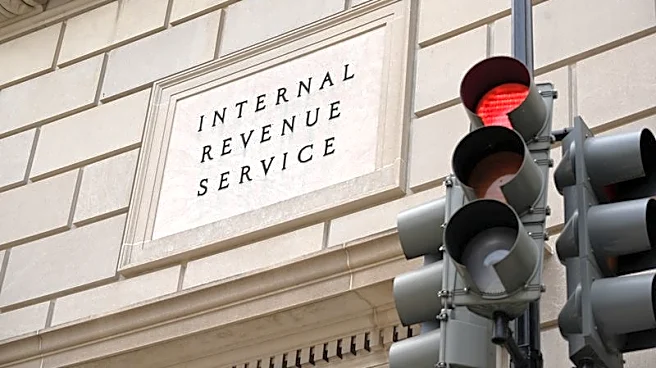
President Donald Trump and his legal team are currently in discussions with the Internal Revenue Service (IRS) to resolve a $10 billion lawsuit. The lawsuit, filed by Trump, his sons Donald Jr. and Eric, and the Trump Organization, accuses the IRS and the Treasury
Department of a data breach that led to the leak of Trump's tax information to news outlets between 2018 and 2020. This breach resulted in significant media coverage of Trump's tax returns, including reports that he paid minimal federal income tax in certain years. The lawsuit claims that the leak caused reputational and financial harm to Trump and his organization. In a recent court filing, Trump's lawyers requested a 90-day pause in the proceedings to allow for settlement discussions. The case raises ethical questions, as it involves the president suing a government agency he oversees.
Why It's Important?
The lawsuit highlights significant ethical and legal challenges, as it involves the president suing a federal agency under his administration. The outcome of this case could have implications for the transparency and security of tax information, as well as the accountability of government agencies in handling sensitive data. Additionally, the case underscores the ongoing scrutiny of President Trump's financial dealings and tax practices, which have been a focal point of public and media attention. The resolution of this lawsuit could impact public trust in the IRS and the broader tax system, as well as set precedents for how similar cases might be handled in the future.
What's Next?
The court has been asked to pause the case for 90 days to facilitate settlement discussions. During this period, both parties will explore potential resolutions to avoid prolonged litigation. The outcome of these discussions could lead to a settlement that addresses the concerns raised by the lawsuit. If a settlement is not reached, the case may proceed to trial, where further legal arguments and evidence will be presented. The Department of Justice, representing the IRS, faces the challenge of defending the agency while maintaining ethical standards, given the unique circumstances of the case.