




What's Happening?
The teenage daughter of North Korean leader Kim Jong Un has been making frequent public appearances alongside her father, drawing significant international media attention. These appearances have fueled speculation that she is being groomed as his successor.
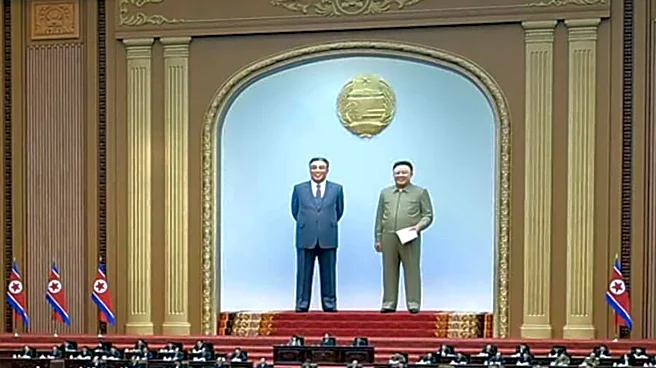
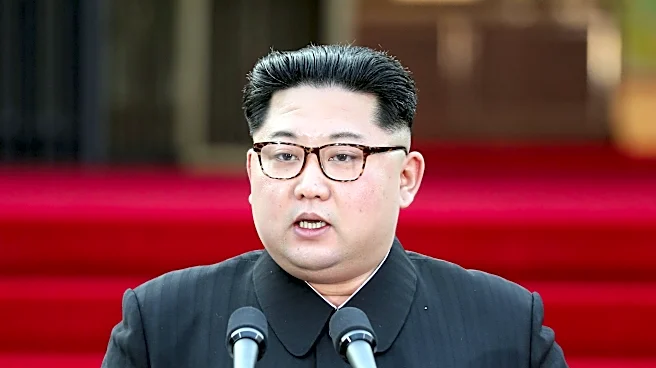
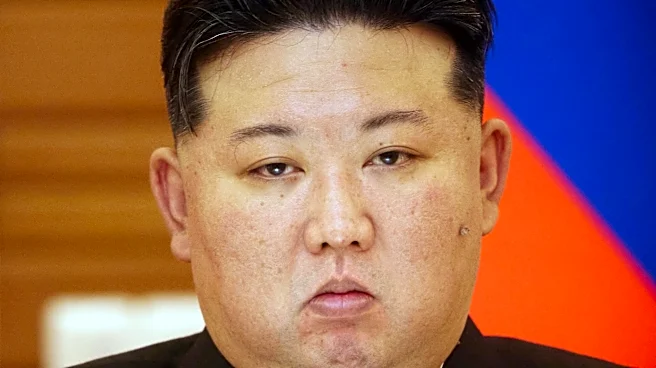
While debates exist regarding her exact status, most experts anticipate that Kim Jong Un will eventually transfer power to one of his children, extending his family's dynastic rule into a fourth generation. Sources within North Korea, as reported by an online news site run by Jo Sung-rae, indicate uncertainty about whether the daughter is definitively Kim's heir. However, Jo Sung-rae believes she is, suggesting that Kim's health concerns may be accelerating the succession preparation process. South Korea's main spy agency reported in late September that Kim Jong Un, despite remaining severely obese and at high risk of cardiovascular disease, showed no other significant signs of poor health. Both his father and grandfather, who preceded him in leadership, died from heart-related issues.
Why It's Important?
The potential succession of Kim Jong Un's daughter carries significant implications for regional stability and international relations. A fourth generation of Kim family rule would solidify the dynastic nature of North Korea's leadership, potentially leading to continued isolation and a focus on military development. The grooming of a female successor, if confirmed, would be a notable shift in a patriarchal society, potentially influencing internal power dynamics and future policy directions. International observers will closely monitor any signs of a formal succession plan, as it could impact denuclearization efforts and inter-Korean relations. The stability of North Korea's leadership is a critical factor for countries like South Korea, Japan, China, and the United States, given the country's nuclear arsenal and its history of provocative actions. Any perceived instability or a clear succession plan could trigger different responses from these key regional and global players.
What's Next?
The international community will continue to closely observe Kim Jong Un's public appearances with his daughter for further indications of a succession plan. Analysts will scrutinize North Korean state media for any official pronouncements or subtle cues regarding her role and future. The health of Kim Jong Un will remain a critical factor, as any deterioration could accelerate the succession process. Reactions from neighboring countries and major global powers will be shaped by the clarity and perceived stability of any leadership transition. Diplomatic efforts regarding North Korea's nuclear program may also be influenced by the identity and perceived ideology of a potential successor. Further public appearances or official roles assigned to Kim's daughter would likely intensify speculation and analysis regarding her future leadership.
Beyond the Headlines
The speculation surrounding Kim Jong Un's daughter as a potential successor highlights the opaque nature of North Korea's political system and the enduring power of the Kim dynasty. The emphasis on lineage over other forms of political legitimacy raises questions about the country's long-term stability and its ability to adapt to modern global challenges. The potential for a female leader in a highly patriarchal society also presents a unique cultural and social dimension, which could either signify a gradual shift or remain largely symbolic within the existing power structure. Furthermore, the international community's reliance on indirect observations and intelligence reports underscores the difficulty in understanding internal North Korean dynamics, making accurate predictions about its future leadership and policies inherently challenging. The ongoing focus on succession also distracts from broader humanitarian and economic issues within North Korea.