
What's Happening?
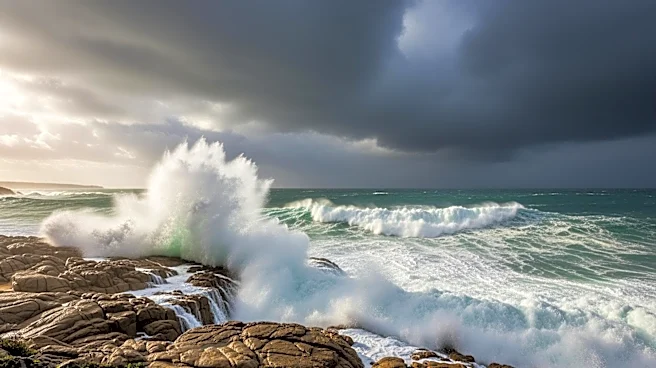
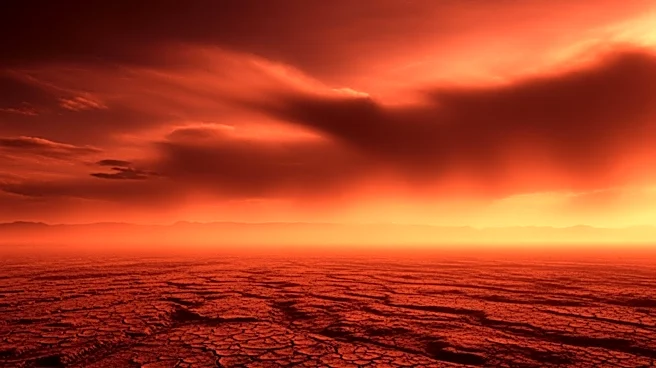
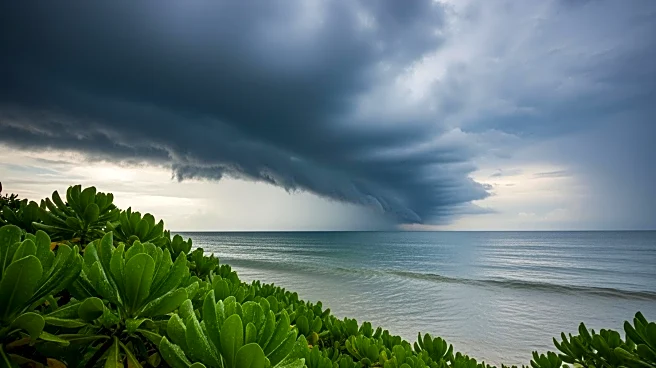
A severe storm front has impacted Greece, bringing with it gale-force winds and significant flooding. This weather event, combined with a Saharan dust storm, has resulted in the sky over Crete turning a deep red, creating an apocalyptic visual effect.
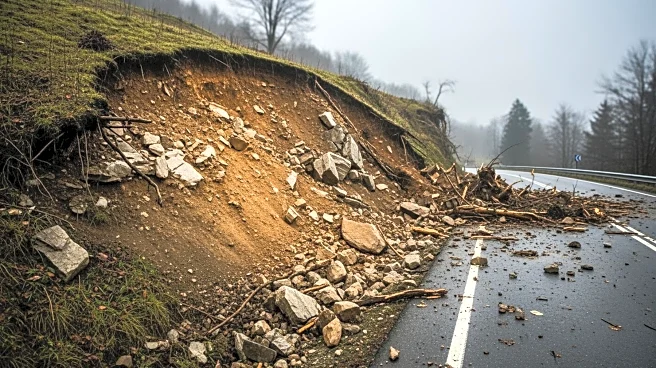
Tragically, the storm has claimed the life of a 55-year-old man in Nea Makri, a town northeast of Athens, who was trapped under a car and swept away by floodwaters. The storm has caused widespread disruption, with the Greek Fire Department responding to numerous calls for assistance, including rescuing individuals trapped by floodwaters and dealing with downed trees and power outages.
Why It's Important?
The storm's impact highlights the vulnerability of infrastructure and emergency services in the face of extreme weather events, which are becoming more frequent and severe due to climate change. The combination of natural phenomena, such as dust storms and heavy rainfall, poses significant challenges for public safety and urban planning. The event underscores the need for improved disaster preparedness and response strategies to mitigate the effects of such natural disasters. Additionally, the visual transformation of the sky serves as a stark reminder of the interconnectedness of global weather systems and the far-reaching impacts of environmental changes.
What's Next?
In the aftermath of the storm, Greek authorities are likely to focus on recovery efforts, including restoring power and clearing debris. There may also be an evaluation of current emergency response protocols to better prepare for future incidents. The event could prompt discussions on climate resilience and the need for infrastructure improvements to withstand similar occurrences. Additionally, the international community may take note of this event as part of broader climate change discussions, emphasizing the importance of global cooperation in addressing environmental challenges.
Beyond the Headlines
The storm's unusual visual effects, with the sky turning red, may have cultural and psychological impacts on the local population, potentially influencing public perception of climate change and environmental issues. This event could also inspire artistic and media representations, further raising awareness about the consequences of climate phenomena. Moreover, the incident may lead to increased scientific interest in studying the interactions between dust storms and weather systems, contributing to a better understanding of these complex processes.