






What's Happening?
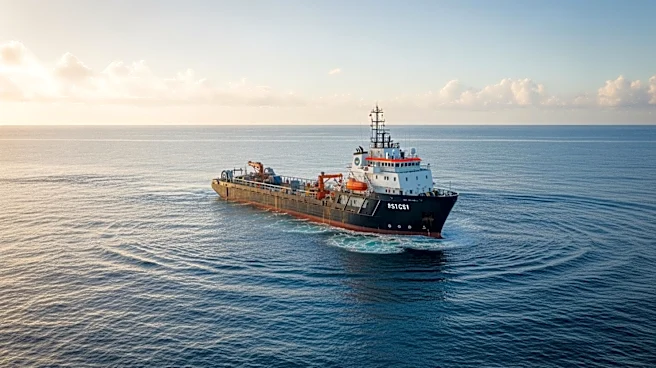
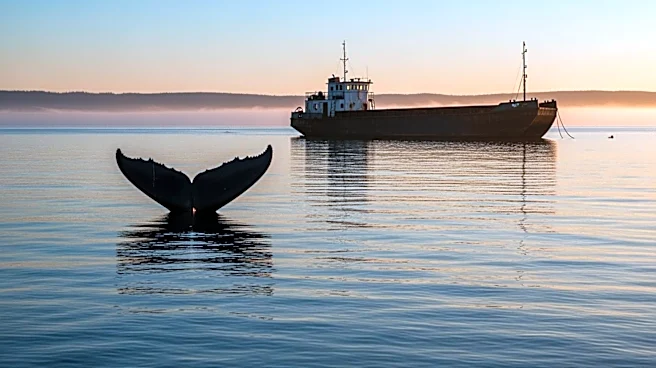
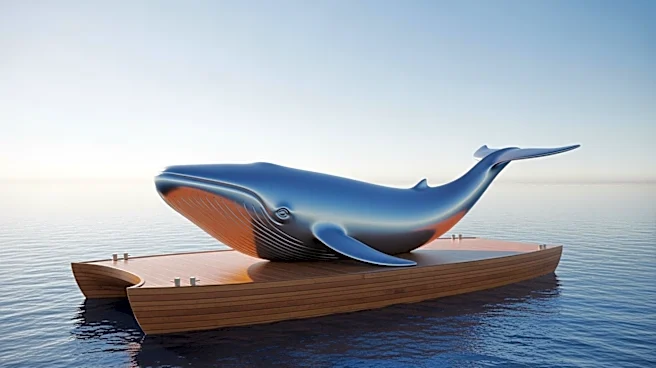
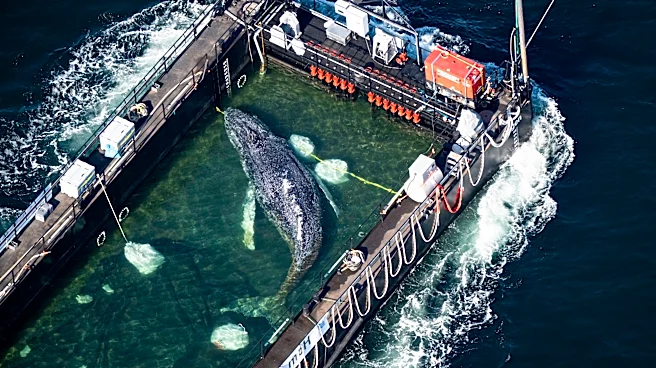
A humpback whale, stranded on the German coast for over five weeks, has been transported out of German waters by a barge. The operation, funded by two German entrepreneurs, aims to relocate the whale to the North Sea. Despite skepticism from marine experts
about the whale's chances of survival, the rescue team remains optimistic. The whale, which suffered skin damage due to low salinity, is now en route to deeper waters where it can potentially recover and find food independently.
Why It's Important?
This event underscores the challenges of wildlife conservation and the ethical dilemmas involved in human intervention. The financial backing from private individuals highlights the role of philanthropy in environmental efforts. The operation's success could influence future rescue strategies and policies, emphasizing the need for collaboration between public and private sectors. It also raises awareness about the impact of human activities on marine ecosystems and the importance of protecting these environments.
What's Next?
The barge will continue its journey through Danish waters towards the North Sea. The focus will be on the whale's recovery and ability to adapt to its new environment. Continued monitoring by marine experts will be crucial to ensure the whale's survival. The outcome of this operation could lead to increased support for similar initiatives and potentially influence policy changes regarding marine animal rescues.
Beyond the Headlines
The rescue operation has sparked a debate about the ethics of intervening in natural processes. Some argue that human intervention can sometimes do more harm than good, while others believe it is our responsibility to assist animals in distress. This situation also highlights the need for better understanding and management of marine ecosystems to prevent such incidents from occurring in the future.