





What's Happening?
The Access Fund, a national advocacy organization for climbers, has filed a motion to reopen its lawsuit against the Trump Administration regarding the reduction of Bears Ears National Monument in southern Utah. This action follows President Trump's proclamation
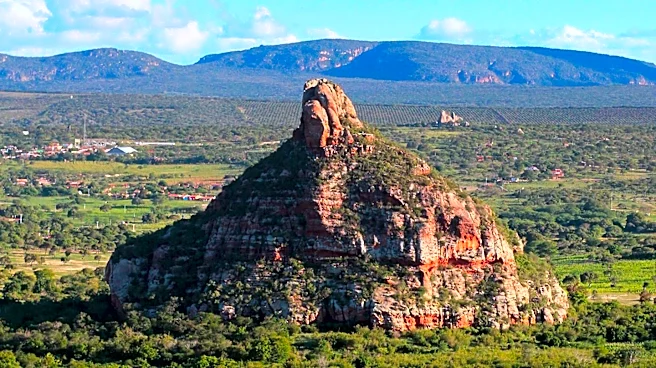
on July 13th, which drastically cut the monument's size by nearly 91%, from 1.36 million acres to 121,000 acres. This reduction removes protections from over 1.2 million acres, including Indian Creek, a globally recognized rock climbing area. The Access Fund had initially filed a lawsuit in 2017 after President Trump first reduced the monument's size, a move that was temporarily suspended when President Biden restored the monument in 2021. The current motion seeks to challenge this latest attempt to diminish the monument's protected status. The organization argues that the reduction poses undue risks to the environment, recreation, wildlife, paleontological resources, and the cultural heritage of the area, which was originally proposed and conceived by five sovereign tribal nations.
Why It's Important?
The lawsuit by the Access Fund against the Trump Administration over Bears Ears National Monument carries significant implications for environmental conservation, Indigenous rights, and outdoor recreation in the U.S. The reduction of the monument's size threatens critical habitats, sacred sites, and archaeological resources vital to the Hopi Tribe, Navajo Nation, Ute Mountain Ute Tribe, Zuni Tribe, and Ute Indian Tribe. For the climbing community, the loss of protection for areas like Indian Creek, a world-class destination, represents a direct impact on access and the preservation of unique recreational opportunities. Beyond specific interests, this legal challenge underscores the ongoing debate over federal land management and the balance between resource extraction and conservation. A successful challenge could set a precedent for protecting national monuments from future reductions, while a failure could embolden further attempts to open protected lands to development, affecting public access and the long-term ecological and cultural integrity of these areas.
What's Next?
The Access Fund has filed a motion to reopen its existing lawsuit, which means the federal court will now consider whether to proceed with the legal challenge against the Trump Administration's reduction of Bears Ears National Monument. The court's decision on this motion will determine the immediate future of the legal battle. If the court allows the lawsuit to proceed, it will likely involve further legal arguments and potentially a lengthy process to determine the legality of the monument reduction. Stakeholders, including the Access Fund, tribal nations, and environmental groups, will continue to advocate for the monument's full protection. Conversely, industries interested in resource extraction within the de-protected areas may continue to push for development. The outcome of this lawsuit could influence future presidential actions regarding national monument designations and protections, potentially leading to legislative efforts to clarify or strengthen the Antiquities Act, under which these monuments are established.
Beyond the Headlines
The legal battle over Bears Ears National Monument extends beyond land management, touching upon fundamental questions of federal power, Indigenous sovereignty, and the definition of public lands. The monument's original designation was a collaborative effort with five tribal nations, making its reduction a direct challenge to their historical and cultural ties to the land. This case highlights the tension between conservation efforts and economic interests, particularly those related to extractive industries. It also raises ethical considerations about the long-term stewardship of natural and cultural heritage versus short-term economic gains. The outcome could redefine the scope of presidential authority to modify national monuments, potentially impacting the protection of other federally designated areas across the U.S. The ongoing debate reflects a broader societal discussion about who has the right to decide the fate of these lands and what values should take precedence in their management.