






What's Happening?
A multidisciplinary research group at Saint Michael's College is studying Vermont's successful response to the COVID-19 pandemic, focusing on the communication strategies employed by Governor Phil Scott. The federally funded project, part of the University
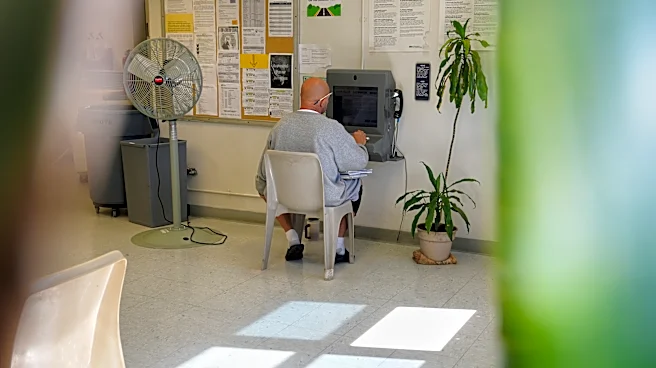
of Vermont's broader SOCKS (Science of Online Corpora, Knowledge, and Stories) initiative, involves undergraduates and faculty from Sociology, Computer Science, and Political Science/Public Health. They are analyzing transcripts of Governor Scott's press conferences from March 2020 onward, examining how his language utilized 'social capital'—the connections and bonds within a community—to encourage adherence to public health guidelines. The team is also comparing Scott's speeches to those of New Hampshire's Governor Chris Sununu and investigating areas where Vermont's response was less effective, such as the impact of COVID-19 on the incarceration system.
Why It's Important?
Vermont's COVID-19 response is considered one of the most successful in the U.S., making this research crucial for understanding effective public health communication during crises. The study's focus on 'social capital' highlights the importance of community cohesion and trust in shaping public behavior during emergencies. The findings could provide valuable insights for future public health emergencies, climate-related disasters, or any situation requiring collective action. By analyzing both successful and less successful aspects of Vermont's response, such as the challenges faced within the incarceration system, the research offers a comprehensive view of policy implementation and communication effectiveness. This work contributes to a growing body of knowledge on how governments can better prepare for and respond to crises by leveraging community strengths and transparent communication.
What's Next?
The research project is in its fourth year of a five-year grant, with ongoing analysis of Governor Scott's communication. The team plans to compare his pre-pandemic press conference language with that used during the pandemic to identify shifts in messaging. They are also using computational linguistics tools, like the SOCKS 'Hedonometer,' to analyze the emotional tone and word associations in the speeches. The findings regarding the incarceration system, which showed higher transmission rates and negative mental health impacts due to isolation, will inform discussions on how to better protect vulnerable populations in future crises. The group aims to present their research at conferences, contributing to the broader academic and policy discourse on emergency preparedness and communication strategies.
Beyond the Headlines
This research delves into the subtle yet powerful role of language and community dynamics in public health outcomes. The concept of 'social capital' extends beyond mere policy implementation, touching upon the cultural and psychological underpinnings of collective action. The study's exploration of the incarceration system reveals a critical ethical dimension: whether the same level of concern and social capital approach is applied to all segments of the population during a crisis. This highlights potential disparities in how different groups are protected and communicated with during emergencies. The project's multidisciplinary nature also underscores the complexity of public health challenges, requiring insights from sociology, computer science, and political science to fully understand and address them. The long-term implications of this research could influence how leaders frame public discourse and foster community resilience in an increasingly uncertain world.