


What's Happening?
Rural Iowa 4-H clubs are receiving broadband connectivity through a new partnership between Starlink, the satellite internet company, and the National 4-H Council. This initiative aims to bridge the technology gap in rural communities, enabling 4-H students
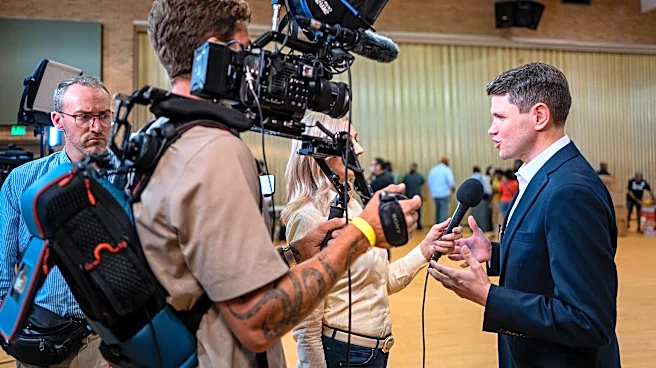
to participate in robotics programming and other STEM-focused activities that require reliable internet access. Alexa Groff, 4-H STEM education specialist with Iowa State University Extension and Outreach, highlighted that many existing 4-H robotics clubs in Iowa operate in locations like county fairgrounds and community buildings that lack consistent internet. The Starlink systems, funded by Tractor Supply Company, will provide high-speed internet via low-earth orbiting satellites, reducing delays and increasing download speeds. Iowa has received 10 of the 100 Starlink kits distributed to 4-H communities with identified broadband gaps, with other kits going to programs at various land-grant universities across the U.S.
Why It's Important?
This partnership is crucial for addressing the digital divide in rural Iowa and other underserved areas. Reliable internet access is no longer a luxury but a necessity for education, economic development, and social engagement. By providing broadband to 4-H clubs, the initiative directly empowers rural youth to engage in critical STEM fields like robotics, which are essential for future careers. This levels the playing field for students who might otherwise be disadvantaged compared to their urban peers, fostering critical thinking and problem-solving skills. Furthermore, internet access will enable 4-H chapters to utilize online resources like the Clover platform, offering hundreds of interactive lessons. The lack of broadband has historically forced rural students to seek internet access in public libraries, highlighting the urgency of such solutions to ensure equitable educational opportunities.
What's Next?
The 10 Starlink kits allocated to Iowa will be deployed in 4-H communities specifically identified as having broadband gaps. This deployment will allow existing robotics clubs to fully participate in activities and potentially facilitate the creation of new clubs in areas previously limited by connectivity issues. The program's success will likely be monitored through student participation rates in STEM activities and their engagement with online educational resources. The broader impact could lead to increased interest and proficiency in technology among rural youth, preparing them for a rapidly evolving job market. The partnership may also serve as a model for future collaborations aimed at expanding broadband access and STEM education in other rural regions across the U.S., potentially attracting more funding and resources for similar initiatives.
Beyond the Headlines
This initiative underscores the persistent challenge of broadband access in rural America and the innovative solutions being deployed to address it. The collaboration between a private technology company like Starlink, a national youth organization like 4-H, and academic institutions highlights a multi-sector approach to tackling infrastructure and educational disparities. Beyond immediate educational benefits, providing reliable internet access can have profound long-term effects on rural communities, including improved access to telehealth, remote work opportunities, and enhanced civic engagement. The focus on STEM education, particularly robotics and the ethical implications of artificial intelligence, prepares a new generation of rural leaders to navigate and contribute to a technologically advanced world, ensuring that rural areas are not left behind in the digital age.