






What's Happening?
The New York City Department of Transportation (NYC DOT) is significantly expanding its electric vehicle (EV) charging infrastructure across the five boroughs. This initiative is a crucial part of the city's broader goal to achieve net-zero transportation
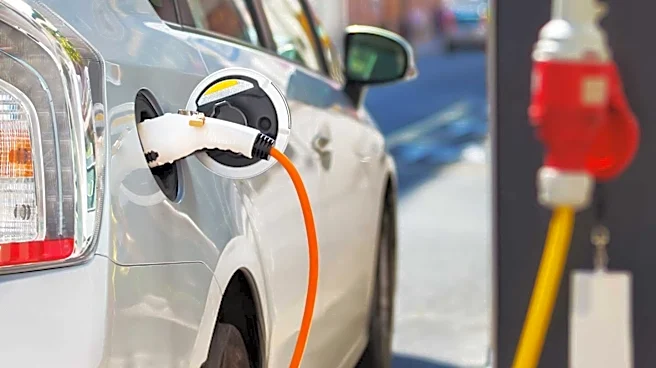
greenhouse gas emissions by 2050. NYC DOT plans to install 600 additional curbside Level 2 charging points over the next three years. Currently, 88 Level 2 charging ports are available at curbside locations, installed in partnership with Con Edison. These chargers are compatible with most EVs, including Teslas with an adapter, and are managed by FLO. The city also operates five DC fast charging stations at public parking facilities and is working with the New York Power Authority (NYPA) to add five more, totaling approximately 30 fast-charging plugs. These efforts aim to address the challenge of EV charging in a city where many residents park on the street and lack access to home chargers. The city's comprehensive plan, 'Electrifying New York: An Electric Vehicle Vision Plan for New York City,' outlines initiatives such as growing the city-operated fast charging network to over 80 plugs by 2025 and creating a network of 10,000 curbside charge points by 2030.
Why It's Important?
This expansion of EV charging infrastructure is vital for New York City's environmental and public health goals. Transportation accounts for nearly 30% of NYC's greenhouse gas emissions, with passenger cars being a major contributor. By increasing the accessibility of EV charging, the city aims to accelerate EV adoption, thereby reducing air pollution and noise, and contributing to its carbon neutrality target. For residents, this means greater convenience and reduced range anxiety, making EVs a more viable option for daily commutes and longer trips. The availability of both Level 2 and DC fast chargers caters to different charging needs, from overnight charging to quick top-ups. Economically, this initiative could stimulate the EV market in NYC, potentially leading to more jobs in installation, maintenance, and related services. It also positions New York City as a leader in urban sustainable transportation, providing a model for other major cities facing similar challenges in transitioning to electric mobility. The city's commitment to providing charging options in public spaces is particularly important for residents without private garages or driveways, ensuring equitable access to EV technology.
What's Next?
NYC DOT is actively seeking public feedback on initial potential charger locations, with a submission deadline of September 30, 2026, through its Projects & Initiatives portal. This public engagement will help refine the deployment strategy for the 600 new curbside Level 2 charging points. The city will continue to implement its 'Electrifying New York' plan, which includes equipping 20% of all spaces in municipal public parking lots and garages with Level 2 chargers by 2025, increasing to 40% by 2030. Furthermore, the plan aims to establish a network of 1,000 curbside charge points by 2025, expanding to 10,000 by 2030. NYC DOT will also develop a plan for Level 1 and Level 2 user-supplied cord charging systems integrated with existing street infrastructure. Ongoing efforts include advocating for federal funding and supportive policies, collaborating with utilities and regulators to streamline charger installation, and engaging with EV stakeholders to understand evolving market and technology needs. The 'PlugNYC' marketing program will continue to raise public awareness about EVs and charging opportunities.
Beyond the Headlines
The aggressive expansion of EV charging infrastructure in New York City highlights a broader shift in urban planning and energy policy. Beyond the immediate environmental benefits, this initiative addresses critical social equity concerns. In dense urban environments, access to private charging is often limited to homeowners with garages, excluding a significant portion of the population living in apartments or without dedicated parking. By prioritizing curbside and public parking facility charging, NYC DOT is working to democratize EV ownership, making it accessible to a wider demographic. This move could also influence real estate development, with a growing demand for EV-ready buildings and public spaces. The integration of EVs into the city's energy ecosystem also presents opportunities for grid modernization and resilience, as vehicle batteries could eventually play a role in supporting the grid through vehicle-to-grid (V2G) technologies. The success of NYC's plan could serve as a blueprint for other global megacities grappling with similar challenges, demonstrating how comprehensive public infrastructure investment can drive sustainable urban transformation.