
What's Happening?
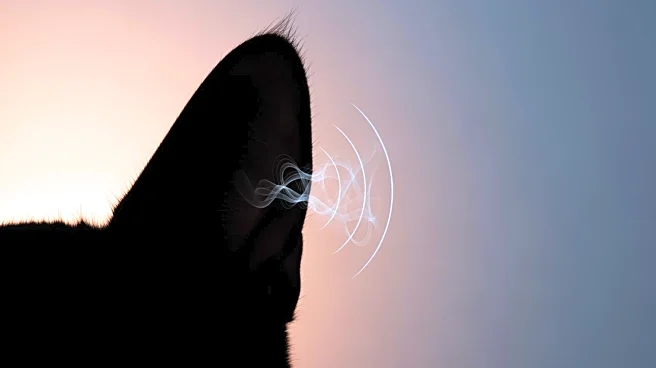
A recent study conducted by researchers from the Museum für Naturkunde Berlin and the University of Naples Federico II has found that a domestic cat's purr is more indicative of its individual identity
than its meow. The research, published in Scientific Reports, utilized automatic speech-recognition methods to analyze the vocalizations of both domestic and wild cats. The study revealed that while meows are highly variable and situation-dependent, purrs remain stable and are individually recognizable. The research team, including bioacoustician Mirjam Knörnschild, discovered that domestication has increased the variability of meowing, making it a flexible tool for cats to communicate with humans in various contexts.
Why It's Important?
This study highlights the evolutionary adaptations of domestic cats in human environments. The findings suggest that while meows have evolved to be flexible for various human interactions, purrs serve as a consistent identity marker. This could have implications for understanding feline communication and behavior, particularly in how cats interact with their human caregivers. The ability of cats to adjust their meows to suit different situations may have been favored by domestication, allowing them to better navigate life in human-dominated settings. This research could influence how pet owners and veterinarians interpret feline vocalizations, potentially improving human-cat interactions and care.
What's Next?
Further research could explore the practical applications of these findings in pet care and animal behavior studies. Understanding the nuances of feline vocal communication might lead to better training methods or tools for enhancing human-cat relationships. Additionally, the study opens avenues for investigating how other domesticated animals have adapted their communication strategies in response to human environments. Researchers may also look into the genetic and neurological underpinnings of these vocal behaviors to gain deeper insights into the domestication process.
Beyond the Headlines
The study underscores the complex interplay between domestication and animal communication. It raises questions about how other domesticated species might have similarly adapted their vocalizations. The research also touches on the broader theme of how animals modify their behaviors to thrive in human-altered environments, which could have implications for conservation efforts and understanding animal welfare in urban settings.