
What's Happening?
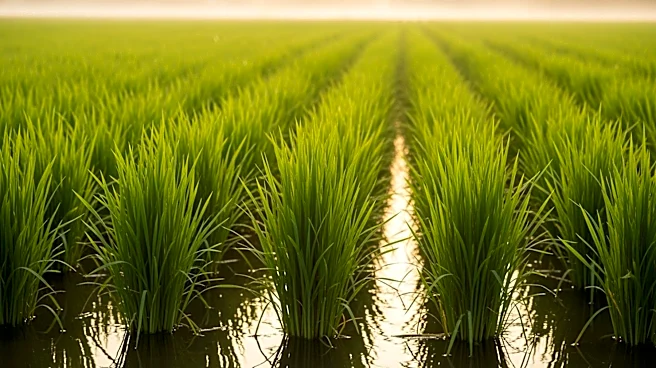
Rice farming, a significant source of methane emissions, is undergoing a transformation with new technologies aimed at reducing its environmental impact. The International Rice Research Institute (IRRI)
is at the forefront of this change, promoting methods like Alternate Wetting and Drying (AWD) to reduce water use and methane emissions. AWD involves controlled irrigation cycles, allowing fields to dry before re-irrigating, which has shown to decrease water use by up to 30% while maintaining crop yields. These innovations are part of a broader effort to make rice farming more sustainable and climate-friendly.
Why It's Important?
Rice is a staple food for billions and a major agricultural product, particularly in Asia. Reducing its environmental impact is crucial for global climate goals. The adoption of sustainable practices like AWD can significantly lower methane emissions, contributing to climate change mitigation. These practices also offer economic benefits by reducing resource use and potentially increasing resilience to climate variability. The success of these innovations could serve as a model for other agricultural sectors seeking to balance productivity with environmental stewardship.
What's Next?
IRRI is expanding its efforts beyond the Philippines, working with governments and farmers across Asia to implement low-emission rice models. The integration of digital tools and mechanization is expected to further enhance the efficiency and sustainability of rice farming. As these practices gain traction, they could be included in national greenhouse gas inventories and carbon markets, providing additional incentives for adoption. The continued collaboration between research institutions, governments, and farmers will be key to scaling these solutions globally.