
What's Happening?
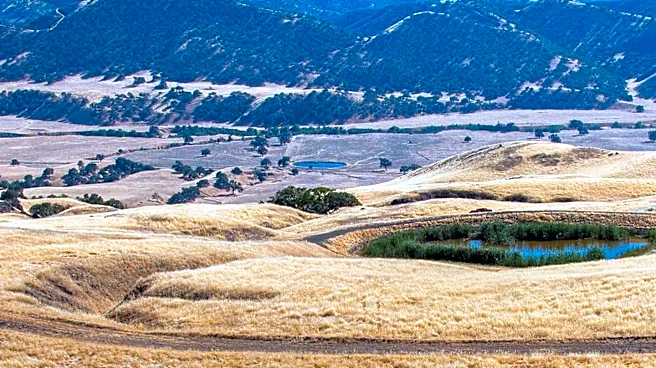
The Land Trust of Napa County announced on May 7, 2024, the acquisition of the 1,318-acre Mead Ranch, located near Atlas Peak above Yountville. This significant donation was made through the estate of the late
poet Jane Mead, who passed away in 2019 at the age of 61. The Mead Ranch is strategically positioned adjacent to the 2,300-acre Walt Ranch, which was protected the previous year, and the Land Trust’s own 1,380-acre Sutro Preserve. This acquisition is crucial for creating a continuous wildlife corridor along the eastern rim of Napa Valley. Doug Parker, the Land Trust’s chief executive at the time of the announcement, highlighted the property's importance for Napa's rare biodiversity and its key location, connecting three large blocks of land under conservation. Mead, a poet with five published collections, left a tenured position at Wake Forest University to manage her family's property in Napa, and many of her poems were inspired by this land. Following a cancer diagnosis, she decided to protect the property in perpetuity, driven by specific reasons such as the rare species it harbors and its role in the wildlife corridor.
Why It's Important?
This land donation is critically important for biodiversity conservation in Napa County, California. The Mead Ranch is home to several rare and endangered plant species, including Mead’s Owl’s Clover (Castilleja ambigua var. meadii), which is found almost exclusively on this ranch and one nearby property. Other endangered species present include Few-flowered Navarretia (Navarretia leucocephala ssp. pauciflora), federally listed as endangered, and Napa Bluecurls (Trichostema ruygtii). The property also contains some of the most species-diverse vernal pools remaining in Napa County, which are seasonal wetlands vital for specialized plant life. The conservation of these vernal pools is particularly significant given that such habitats have been heavily reduced across California. By connecting Mead Ranch with the Walt Ranch and Sutro Preserve, the Land Trust is actively building a continuous wildlife corridor. This contiguity is essential for the long-term survival of species, allowing them to move between protected areas and adapt to environmental changes, thereby enhancing the ecological resilience of the region.
What's Next?
While the immediate future secures the permanence of the 1,318-acre Mead Ranch, the broader ambition is to continue expanding the wildlife corridor along the ridge above the east side of Napa Valley. This long-term effort aims to connect Robert Louis Stevenson State Park in the north to American Canyon in the south. The Land Trust will likely focus on identifying and acquiring additional parcels of land to complete this corridor, which is currently an ambition with several substantial pieces in place. Although no specific timeline is scheduled, the hope for future learning opportunities for children on the ranch, as mentioned by Doug Parker, suggests potential educational programs or public access initiatives could be explored once the conservation efforts are firmly established. The focus will remain on monitoring and protecting the rare species and vernal pools on the property, ensuring the ecological integrity of this newly conserved land.
Beyond the Headlines
The donation of Mead Ranch transcends a simple land transaction, highlighting the profound connection between art, personal legacy, and environmental conservation. Jane Mead's decision to leave academia and return to manage her family's land, which subsequently became a central theme in her poetry, underscores how deeply individuals can be intertwined with their natural surroundings. Her choice to protect the property in perpetuity, driven by a clear understanding of its ecological value rather than mere sentimentality, sets a powerful precedent for how personal estates can contribute to public good. This act also brings to light the often-overlooked role of private land ownership in preserving critical habitats, especially in regions facing development pressures. The naming of Mead’s Owl’s Clover after her family further solidifies this unique bond, illustrating how human history and natural history can converge to create a lasting legacy of conservation. The story serves as a poignant reminder of the enduring impact individuals can have on the landscape and the environment.