
What's Happening?
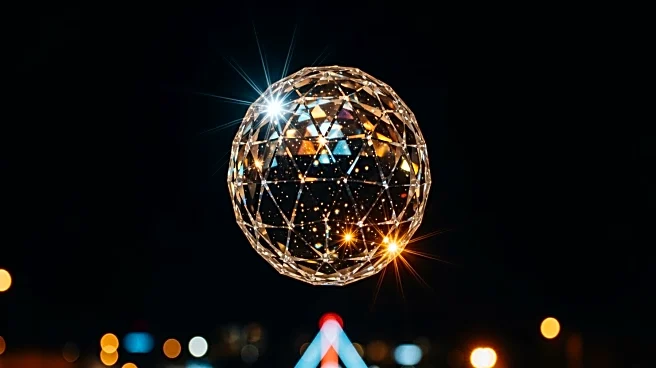
The iconic New Year's Eve ball drop in New York City's Times Square is set to welcome the year 2026 with a crystal-covered ball, 12.5 feet in diameter. This tradition, organized by New York Times owner
Adolph Ochs, began on December 31, 1907. The original ball was crafted by Jacob Starr, a Ukrainian immigrant metalworker. The event has been held annually, except during 1942 and 1943, when a minute of silence was observed instead. The current ball, the ninth version since 1907, is the largest ever, weighing 12,350 pounds and adorned with over 5,000 handcrafted Waterford Crystal discs. Michael Phillips, president of Jamestown, the company redeveloping One Times Square, highlights the ball's symbolic significance of releasing the past and looking forward to the future.
Why It's Important?
The Times Square ball drop is more than just a New Year's Eve tradition; it is a cultural event that symbolizes hope and renewal for millions worldwide. The event draws significant attention, both in-person and through global broadcasts, making it a major tourist attraction and a boost for New York City's economy. The tradition's continuity, even during challenging times like the COVID-19 pandemic, underscores its resilience and importance as a symbol of unity and celebration. The upcoming dual celebration, with the ball dropping again on July 4 to mark the 250th anniversary of the United States, further emphasizes its role in national celebrations.
What's Next?
Following the New Year's Eve celebration, the ball will drop again on July 4, 2026, to commemorate the 250th anniversary of the United States. This additional event is expected to draw even more attention and visitors, potentially boosting tourism and economic activity in New York City. Stakeholders, including city officials and businesses, are likely to prepare for increased security and logistical arrangements to accommodate the anticipated crowds and media coverage.