


What's Happening?
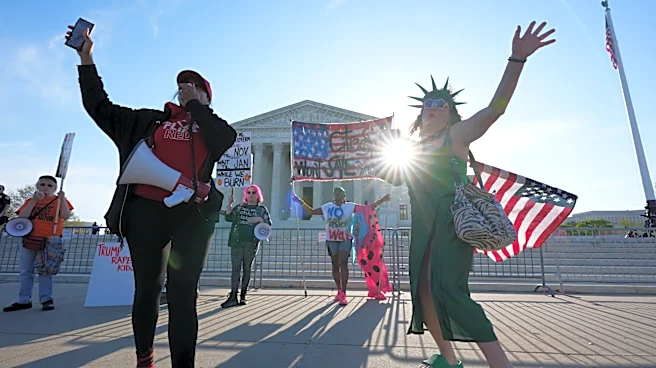
The Supreme Court is reviewing President Trump's executive order aimed at ending birthright citizenship for children born to non-citizens in the U.S. The order challenges the long-standing interpretation of the 14th Amendment, which grants citizenship to anyone
born on U.S. soil. During the hearing, justices from both conservative and liberal backgrounds expressed skepticism about the order's alignment with constitutional and federal law. The case represents a significant test of executive power and could have far-reaching implications for immigration policy in the United States.
Why It's Important?
A ruling in favor of President Trump's order could fundamentally alter the understanding of citizenship in the U.S., affecting millions of individuals born to non-citizen parents. This case highlights the ongoing debate over immigration policy and the balance of power between the executive branch and the judiciary. The decision could set a precedent for future executive actions and influence the legal framework surrounding citizenship and immigration rights.
What's Next?
The Supreme Court is expected to deliver a ruling by early summer. The outcome will likely prompt reactions from political leaders, immigrant advocacy groups, and the public. If the court upholds the order, it may lead to legislative efforts to address the implications for affected individuals. Conversely, a rejection of the order could reinforce existing interpretations of the 14th Amendment and impact future executive actions on immigration.