






What's Happening?
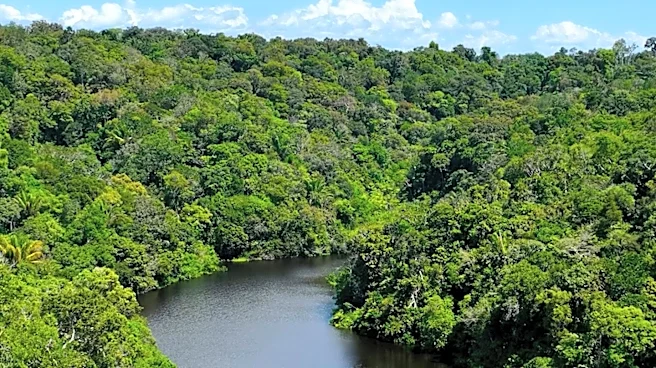
A new cross-border study, 'Crime Presence in the Amazon 2026,' conducted by Amazon Underworld, has identified the presence of criminal networks or armed groups in 768 out of 1,310 Amazon municipalities surveyed across six countries: Brazil, Bolivia, Colombia,
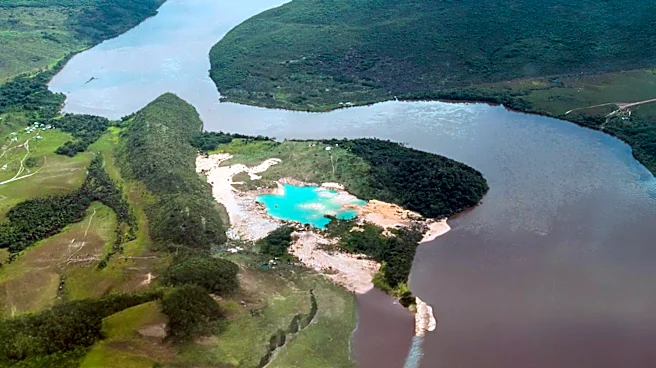
Ecuador, Peru, and Venezuela. This represents approximately 59% of the surveyed areas. The study, which gathered data between May and October 2026 through interviews, state documents, and information requests, highlights that gold has surpassed cocaine as the most lucrative criminal industry in the Amazon. A one-kilogram bar of gold was valued at roughly US$135,000 as of October 9, 2026. The report also notes that illegally mined and legally mined gold often enter the same refineries, complicating traceability. Furthermore, nine U.S.-designated terrorist organizations are present in 694 of the researched municipalities, accounting for 53% of the areas.
Why It's Important?
The findings of this study have significant implications for U.S. industries and policy. The commingling of illegal and legal gold in refineries poses a substantial traceability challenge for investors in gold and critical minerals, raising questions about the ethical sourcing of these materials. U.S. firms with Brazilian counterparties must also be aware of the U.S. terrorist designations of groups like Comando Vermelho and Primeiro Comando da Capital, which carry U.S. sanctions. The study suggests that militarized crackdowns are often ineffective, merely displacing criminal activity rather than eradicating it. This underscores the need for alternative strategies, such as anti-money laundering actions, forest protection, and regional cooperation, to address the root causes and facilitators of these criminal enterprises. The involvement of U.S.-designated terrorist organizations in the Amazon basin also highlights a national security concern, as these groups can leverage illicit profits to fund other activities.
What's Next?
The study urges Amazon governments to implement anti-money laundering measures and forest protection initiatives in conjunction with policing efforts. This suggests a shift towards a more comprehensive approach that tackles the financial and environmental aspects of organized crime. Investors in gold and critical minerals are likely to face increased scrutiny regarding their supply chains, potentially leading to demands for more robust due diligence processes to ensure their investments are not inadvertently supporting criminal activities. U.S. firms operating in the region will need to carefully monitor their Brazilian counterparties to ensure compliance with U.S. sanctions related to the designated terrorist organizations. The report does not indicate whether future editions will use the same sample size, but continued monitoring of criminal activity in the Amazon will be crucial for understanding evolving threats and informing policy responses.
Beyond the Headlines
The report's revelation that illegal and legal gold share refineries points to a deeper systemic issue where illicit activities are deeply intertwined with legitimate economic structures. This blurs the lines between legal and illegal commerce, making it challenging to combat criminal enterprises effectively. The study's emphasis on anti-money laundering and forest protection suggests a recognition that environmental degradation and financial illicit flows are not merely side effects but integral components of organized crime in the Amazon. The presence of U.S.-designated terrorist organizations in the region also raises ethical questions about the global responsibility to protect vulnerable ecosystems and indigenous communities from exploitation and violence. The long-term implications could include increased pressure on international bodies and governments to develop more coordinated and holistic strategies that address both the criminal and environmental dimensions of the crisis in the Amazon.