



What's Happening?
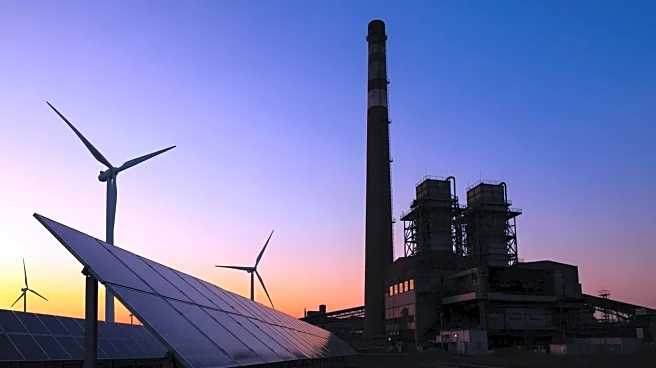
Australia is set to retire 75% of its coal power plants by 2035, according to BloombergNEF. This move is driven by the aging infrastructure of coal plants, increased competition from low-cost renewable energy sources, and government decarbonization targets.
Coal power currently constitutes 45% of Australia's total power generation, but the transition to cleaner energy is seen as necessary to meet the country's updated Nationally Determined Contribution (NDC) to reduce emissions by 62% to 70% from 2005 levels by 2035. The shift is part of a broader global trend, with many countries, including Australia, showing declines in fossil fuel carbon emissions over the past decade.
Why It's Important?
The retirement of coal power plants in Australia is significant as it marks a major shift towards renewable energy, which could influence global energy markets and environmental policies. This transition is crucial for Australia to meet its climate goals and reduce its carbon footprint. However, it also raises concerns about energy security and the economic impact on regions dependent on coal. The move could lead to increased investment in renewable energy infrastructure and technology, potentially creating new jobs and industries. Conversely, it may also result in economic challenges for communities reliant on coal mining and power generation.
What's Next?
As Australia phases out coal power, the focus will likely shift to ensuring a stable and reliable energy supply through renewable sources. This may involve increased government support for renewable energy projects and infrastructure development. Additionally, there could be policy measures to support workers and communities affected by the transition. The government and energy companies will need to balance the pace of the transition to avoid compromising energy security while achieving environmental targets. Stakeholders, including policymakers, businesses, and civil society, will play a crucial role in shaping the future energy landscape.