







What's Happening?
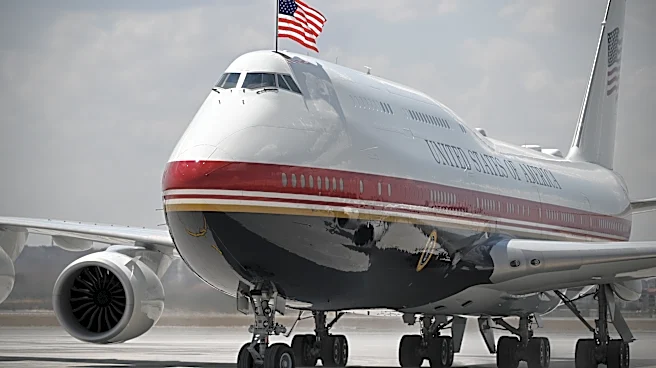
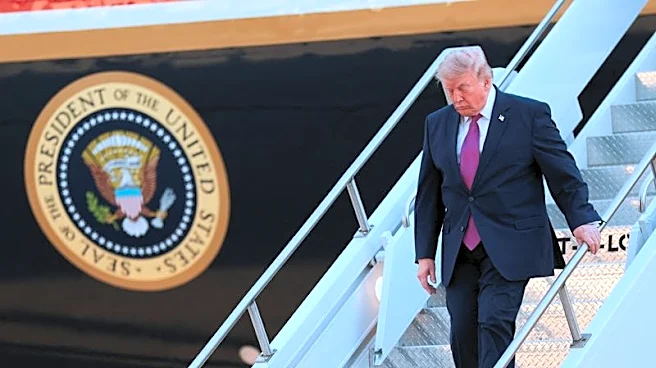
The newly converted Air Force One, a former Qatari-donated jet, is under scrutiny regarding its readiness to handle the security threats faced by a president. President Trump recently opted to fly on the older Air Force One instead of the new plane, raising
questions about the latter's security and defensive capabilities. The new aircraft underwent a rapid conversion process, leading to concerns about whether it received all necessary upgrades to serve as a 'flying White House.' The decision to use the older plane came amid U.S. military actions in Iran, highlighting the importance of robust security measures. Experts have expressed doubts about the new plane's ability to operate in high-threat environments, given the compressed timeline for its conversion.
Why It's Important?
The readiness of the new Air Force One is crucial for ensuring the safety and security of the president during international travel, especially in volatile regions. The scrutiny over the plane's capabilities underscores the challenges of balancing rapid deployment with comprehensive security upgrades. The situation also raises ethical and legal concerns, as the plane was donated by Qatar and is intended for use in President Trump's presidential library after his term. The decision to use the older Air Force One reflects the administration's cautious approach to presidential security, emphasizing the need for fully equipped and reliable aircraft. The ongoing debate highlights the complexities of modernizing presidential transport while maintaining high security standards.
Beyond the Headlines
The accelerated conversion of the new Air Force One raises broader questions about the prioritization of security measures in government procurement processes. The situation highlights the potential risks associated with accepting foreign donations for critical national assets, as well as the ethical implications of using such assets for personal or legacy purposes. The scrutiny of the new plane's capabilities may prompt a reevaluation of the standards and timelines for upgrading presidential aircraft, ensuring that future conversions meet all necessary security and operational requirements. The case also illustrates the challenges of maintaining transparency and accountability in government decisions involving high-profile assets.