





What's Happening?
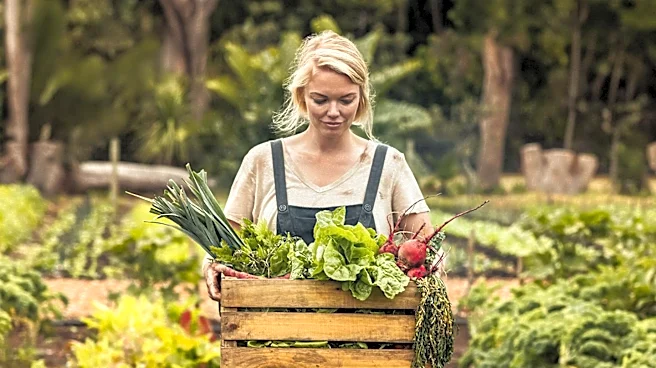
In Tacoma, Washington's South End neighborhood, residents have transformed a portion of Charlotte’s Blueberry Park into a three-quarter-acre edible food forest. This initiative, launched in 2025, aims to provide healthy food options for the community,
which faces challenges with food access and limited tree canopy coverage. The food forest, designed with input from local gardeners and cultural groups, includes fruit and nut trees, shrubs, and herbs, some of which are culturally significant and difficult to find in local stores. While many plants are still young and harvests are currently limited, organizers anticipate larger yields in the coming years. The project draws on permaculture principles and is divided into sections for fruit and nut trees, Pacific Northwest native foods, and subtropical produce. It currently features 69 fruit and nut trees of 27 species, 17 types of fruit shrubs, and 31 types of perennial vegetables and herbs, along with medicinal plants.
Why It's Important?
This food forest project in Tacoma is a significant community-led effort to address food insecurity and promote sustainable food systems in the U.S. The South End neighborhood, characterized by its racial and ethnic diversity, has experienced challenges with food access, exacerbated by recent grocery store closures. The food forest offers an alternative source of fresh, culturally relevant produce, complementing traditional food banks and grocery stores. It also serves as an educational tool, reconnecting residents with food sources and demonstrating the potential for public parks to offer more than just ornamental trees. This initiative aligns with a growing trend of food forests across the U.S., such as those in Denver and Atlanta, which aim to bridge the gap in access to healthy foods, particularly in areas designated as food deserts. The success of this project could inspire similar community-driven food initiatives in other urban areas facing similar challenges.
Beyond the Headlines
Beyond its immediate impact on food access, the Tacoma food forest project highlights several deeper implications. Ethically, it underscores the importance of community self-sufficiency and resilience in the face of systemic food insecurity. Legally, it demonstrates how public land can be repurposed for community benefit through collaborative efforts between residents and local government (Parks Tacoma). Culturally, the inclusion of culturally important foods fosters a sense of belonging and addresses the specific needs of diverse populations within the neighborhood. Long-term, this initiative could shift perceptions of urban green spaces, promoting a model where parks are not just recreational areas but also vital components of a local food system. It also emphasizes the power of sustained community activism, as residents have historically fought to preserve Charlotte’s Blueberry Park from development, now transforming it into a productive and inclusive resource.