







What's Happening?
Georgia Agriculture Commissioner Tyler J Harper has officially declared September as the start of 'Georgia Grown Apple Season' through a signed proclamation. This initiative aims to celebrate Georgia's apple growers and orchard families, encouraging both
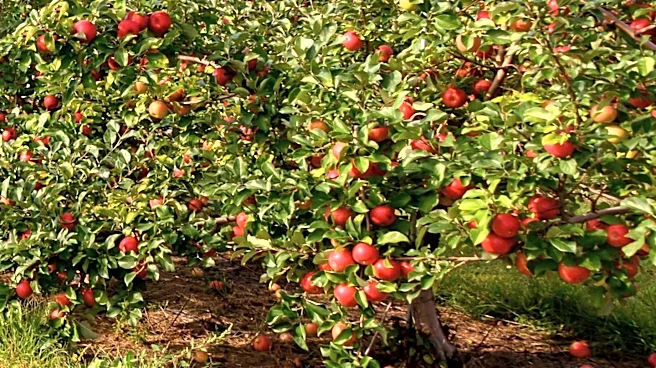
residents and visitors to engage with the state's agricultural industry. The Georgia Department of Agriculture, via its Georgia Grown program, is actively promoting visits to local orchards and the purchase of Georgia Grown apples and related products. Commissioner Harper emphasized that September is an ideal time to experience Georgia's top industry firsthand and support local farmers who have worked diligently on this year's harvest. Georgia boasts a significant apple production, with an estimated 360,000 apple-producing trees statewide. The majority of these apples are cultivated in the North Georgia mountains, and the apple season typically spans from July to December. Ellijay, located in Gilmer County, is recognized as the 'Apple Capital of Georgia' and is home to over nine family-owned apple orchards. In 2024, the state's apple industry generated a farm-gate value exceeding $12 million, underscoring its substantial economic contribution.
Why It's Important?
This declaration is important for several reasons, primarily boosting the agricultural economy and promoting local produce within Georgia. By encouraging consumers to buy 'Georgia Grown' apples, the initiative directly supports local farmers and orchard owners, contributing to their livelihoods and the sustainability of agricultural communities. The emphasis on agritourism, such as apple picking at orchards, also provides an economic stimulus to rural areas, attracting visitors and generating revenue beyond just produce sales. Furthermore, highlighting the $12 million farm-gate value of the apple industry in 2024 demonstrates its significant role in the state's overall economy. This campaign helps to maintain Georgia's agricultural heritage and ensures that consumers have access to fresh, high-quality local produce. It also educates the public about the origins of their food and the effort involved in bringing it to market, fostering a stronger connection between consumers and local agriculture.
What's Next?
Following the proclamation, the Georgia Grown program will continue to invite residents and visitors to celebrate the 'Georgia Grown Apple Season' by utilizing its online map to locate local orchards. This will facilitate agritourism experiences, including apple picking, and encourage the purchase of Georgia Grown apples and apple products throughout the season. The Georgia Department of Agriculture will likely continue its promotional efforts to raise awareness and drive engagement with local apple farms. Farmers and orchard owners are expected to see increased foot traffic and sales as a direct result of this campaign. The focus will remain on supporting the farm families and ensuring the continued growth and recognition of Georgia's apple industry. The success of this season could also influence future agricultural marketing strategies and support programs within the state.
Beyond the Headlines
Beyond the immediate economic benefits, this initiative reinforces the cultural significance of agriculture in Georgia. The designation of Ellijay as the 'Apple Capital of Georgia' and the long-standing tradition of apple production highlight a deep-rooted connection to the land and its resources. Such campaigns can foster a sense of community pride and identity, linking residents to their state's agricultural heritage. Ethically, it promotes sustainable consumption by encouraging local sourcing, which can reduce the carbon footprint associated with food transportation. It also underscores the importance of preserving family farms and traditional agricultural practices in an increasingly industrialized food system. The success of programs like 'Georgia Grown' can serve as a model for other states looking to bolster their local economies and promote their unique agricultural offerings, contributing to a broader movement towards localized food systems and agritourism.