




What's Happening?
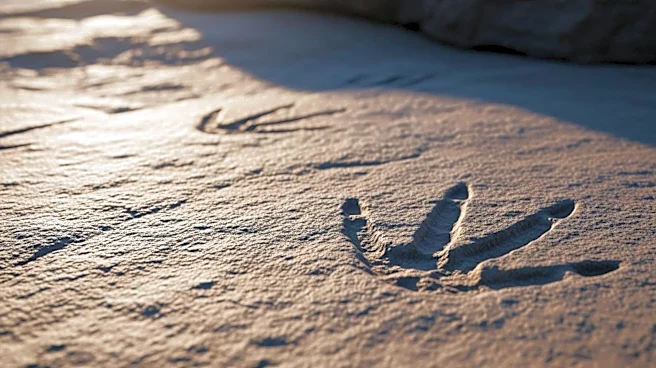
A team of researchers has uncovered a series of dinosaur tracks along South Africa's southern coastline, dating back approximately 132 million years to the early Cretaceous period. These tracks, found in the Brenton Formation near Knysna in the Western
Cape, are the youngest dinosaur tracks identified in southern Africa. The site, measuring about 40 meters long and five meters wide, contains more than two dozen probable dinosaur tracks, suggesting repeated dinosaur activity in the area. The discovery was made during fieldwork in early 2025, initially aimed at finding fossil remains such as a theropod tooth previously found in the area. The tracks are located within the intertidal zone, making them difficult to study due to water coverage at high tide and exposure to erosion.
Why It's Important?
This discovery is significant as it pushes the known timeline of dinosaur activity in southern Africa forward by about 50 million years compared to earlier finds in the Karoo Basin. It is only the second time Cretaceous dinosaur tracks have been recorded in South Africa, highlighting the rarity of such finds due to limited exposure of rocks from that period. The tracks provide valuable insights into the types of dinosaurs that inhabited the region, including theropods, ornithopods, and sauropods. The presence of these tracks suggests a varied dinosaur population and indicates that similar finds may exist elsewhere, potentially leading to further discoveries that could fill gaps in the fossil record.
What's Next?
The discovery of tracks in both the Brenton and Robberg Formations suggests that other exposures of non-marine Cretaceous rocks in the Western and Eastern Cape may hold additional fossil records. Researchers may continue to explore these areas to uncover more evidence of dinosaur activity, which could provide further insights into the region's prehistoric ecosystem. The ongoing study of these tracks will likely involve detailed analysis and preservation efforts to protect them from erosion and other environmental factors.
Beyond the Headlines
The discovery of these tracks not only extends the timeline of dinosaur activity in southern Africa but also raises questions about the environmental conditions that allowed such a diverse range of dinosaurs to thrive in the region. The tracks' location within the intertidal zone suggests that the area may have included river channels or sandy zones where dinosaurs moved regularly. This finding could lead to a reevaluation of the region's geological history and its impact on dinosaur evolution.