








What's Happening?
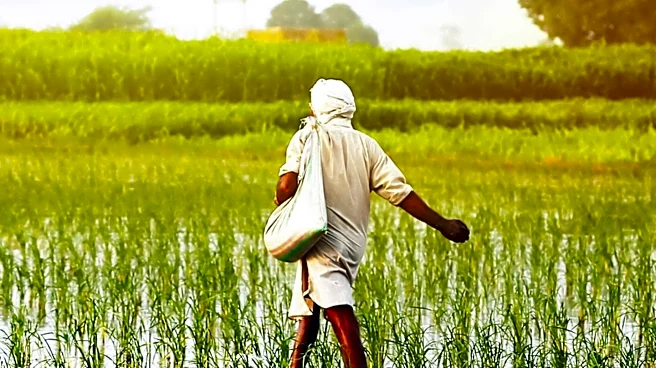
India, the world's largest producer and exporter of rice, is projected to experience its first decline in rice production in a decade, and its most significant drop in nearly two decades. This reduction is primarily attributed to below-normal monsoon
rains, with some rice-producing states facing precipitation deficits as high as 42% since the monsoon season began on June 1. The area dedicated to summer-sown rice is almost 4% lower than the previous year, and these summer crops account for over 80% of India's total rice output. Industry officials, including B.V. Krishna Rao, President of the Rice Exporters Association, estimate a potential production decrease of approximately 10 million tons, representing a nearly 6.5% drop from last year's record of 154 million tons. This situation is contributing to a phenomenon termed 'climateflation,' where climate change-induced weather events lead to increased food prices.
Why It's Important?
The anticipated decline in India's rice production carries significant implications for global food markets and the U.S. economy. As the leading exporter, India's reduced output will inevitably lead to higher local prices and more expensive exports. This trend is exacerbated by similar price increases already observed in other major rice-exporting nations like Thailand and Vietnam, signaling a broader global impact on rice availability and cost. For U.S. consumers, this could translate into higher prices for rice and rice-based products, contributing to inflationary pressures. Businesses involved in food imports and distribution will face increased procurement costs, potentially affecting their profit margins and operational strategies. The concept of 'climateflation' highlights the growing economic vulnerability to climate change, demonstrating how environmental shifts can directly influence commodity markets and household budgets, both domestically and internationally.
What's Next?
In the immediate future, local rice prices in India have already begun to rise in anticipation of the reduced harvest, pushing export prices to their highest levels in over a year. Despite the production decline, India's substantial rice reserves, accumulated from record harvests in recent years, are expected to allow the country to maintain its export levels without imposing restrictions. Public rice stocks, including unmilled paddy, reached a record 59.6 million tons by September 1, significantly exceeding the government's target. However, the long-term outlook suggests continued vigilance regarding weather patterns and their impact on agricultural yields. The potential for further 'climateflation' events, driven by phenomena like El Niño, could lead to sustained upward pressure on global food prices, prompting governments and international organizations to consider strategies for food security and climate resilience.
Beyond the Headlines
The situation in India underscores a critical global challenge: the increasing interconnectedness of climate change, agricultural output, and economic stability. 'Climateflation' is not merely an economic term but a reflection of how environmental degradation and extreme weather events are becoming direct drivers of inflation and food insecurity worldwide. This phenomenon raises ethical questions about global food distribution and the disproportionate impact on vulnerable populations. It also highlights the need for advanced agricultural practices, climate-resilient crops, and international cooperation to mitigate the effects of climate change on food systems. The long-term shift could involve a re-evaluation of global supply chains, increased investment in sustainable agriculture, and the development of early warning systems for climate-induced agricultural disruptions to prevent widespread economic and social instability.