







What's Happening?
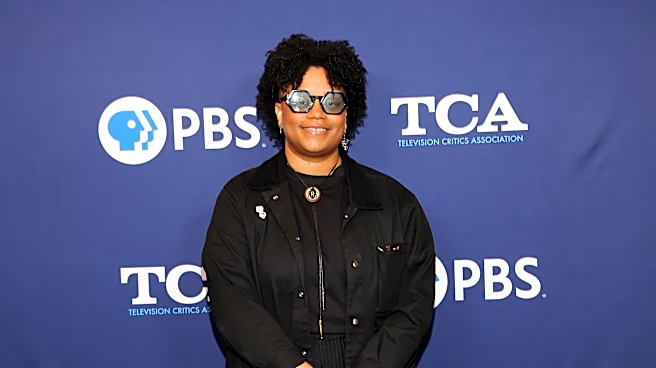
A new four-part documentary series, 'Crime and Punishment in America,' written and directed by Lynn Novick, is airing on PBS. The series spans 250 years of American law and order, offering a comprehensive look at the evolution of the U.S. criminal justice
system. It highlights the country's high incarceration rates, noting that as of 2008, the U.S. held 20% of the world's prison population. The documentary explores changing definitions of crime and punishment, often finding that punishments have historically exceeded the severity of the crimes committed. Through individual stories, the series illustrates broader chronological narratives, examining various aspects from colonial public punishments to the development of modern policing and prison systems. Narrated by Keith David, the program delves into historical figures and events that shaped the justice system, including early reformers and periods of increased fear that led to tougher laws and longer sentences.
Why It's Important?
This documentary is important because it provides a critical historical perspective on the U.S. criminal justice system, which continues to face significant challenges and debates. By tracing 250 years of law and disorder, it helps viewers understand the roots of contemporary issues such as mass incarceration, racial disparities, and the effectiveness of punitive measures. The series' examination of how societal fears have influenced policy decisions offers valuable context for current discussions on criminal justice reform. Understanding the historical context of these issues can inform public discourse and policy-making, potentially leading to more equitable and effective approaches to crime and punishment in the United States. The documentary also implicitly raises questions about the societal costs and benefits of the current system.
Beyond the Headlines
Beyond its historical overview, 'Crime and Punishment in America' touches upon deeper societal implications of the justice system. It subtly highlights how the system has often functioned as a tool of class warfare, with disparities in how white-collar crimes are prosecuted compared to those committed by less affluent individuals. The documentary also points to the economic role of prisons, particularly in rural areas, where they have become significant job programs. This suggests that the justice system is not merely about crime control but is deeply intertwined with economic and social structures. The series encourages viewers to consider the ethical dimensions of punishment and the long-term societal impact of a system that, as poet Reginald Dwayne Betts suggests, is often governed by vengeance rather than mercy, prompting a re-evaluation of fundamental principles of justice.