
What's Happening?
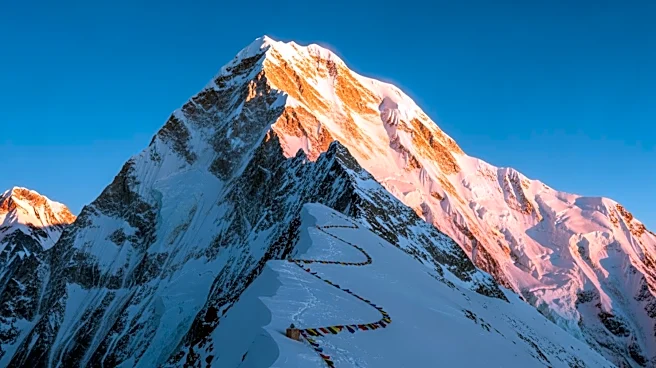
On a single day, 274 climbers successfully ascended Mount Everest from the Nepalese side, setting a new record for the highest number of climbers reaching the summit in one day. This achievement was facilitated
by clear weather conditions and follows a delay in the climbing season due to a large serac blocking the route. The blockage was eventually cleared, allowing climbers to proceed. The record surpasses the previous high of 223 climbers in 2019. This year, the Chinese side of Everest was closed, contributing to the concentration of climbers on the Nepalese route.
Why It's Important?
The record number of climbers highlights the ongoing issue of overcrowding on Mount Everest, which poses safety risks and environmental concerns. The economic benefits for Nepal are significant, as the climbing season attracts international climbers and generates substantial revenue. However, the high volume of climbers also raises questions about the sustainability of current practices and the need for stricter regulations to ensure safety and environmental preservation. The event underscores the delicate balance between economic interests and responsible tourism.
What's Next?
As the climbing season continues, more climbers are expected to attempt the summit, potentially leading to further records. Authorities may need to consider implementing measures to manage the number of climbers and ensure safety. The situation calls for ongoing assessment of environmental impacts and the development of strategies to mitigate negative effects. The success of this year's climbing season may influence future policies and practices regarding permits and climber management.
Beyond the Headlines
The record-setting day on Everest draws attention to the broader implications of adventure tourism and its impact on local communities and environments. The economic benefits for Nepal are significant, but the environmental and safety challenges associated with high volumes of climbers cannot be ignored. The event also highlights the cultural significance of Everest and the ongoing legacy of pioneering climbers. The situation calls for a reevaluation of current practices to ensure the long-term sustainability of Everest as a premier climbing destination.