






What's Happening?
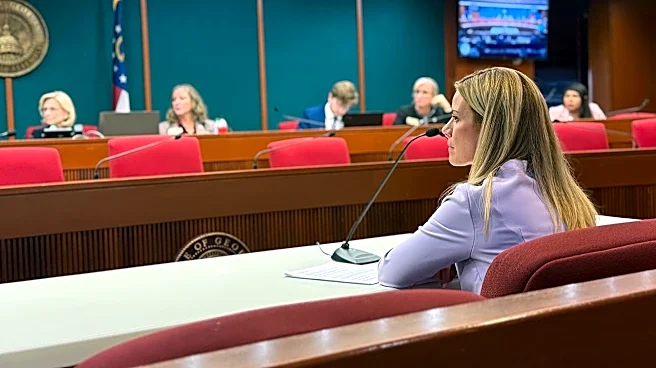
A congressional field hearing in Augusta, Georgia, focused on the economic opportunities and potential risks associated with the rise of artificial intelligence (AI). The hearing was conducted by members of the House Committee on Education and Workforce,
including U.S. Representatives Rick Allen, Lucy McBath, and Joe Wilson. The discussion centered on how AI can create jobs and strengthen industries while also posing risks to workers. Ajikumar Parayil, CEO of Manus, highlighted AI's role in optimizing production in biotech, while Brad Edenfield, a farmer, noted AI's potential to enhance agricultural efficiency. However, concerns were raised by Tony Barlow of the Communication Workers of America about AI's potential to displace workers and degrade job quality. Rep. McBath emphasized the need for AI advancements to be fair and not harm the communities they are meant to serve.
Why It's Important?
The hearing underscores the dual nature of AI as both a driver of economic growth and a potential disruptor of the workforce. AI's ability to enhance productivity and innovation in sectors like biotechnology and agriculture could lead to significant economic gains. However, the potential for job displacement and reduced job quality poses a challenge for policymakers. Ensuring that AI adoption is responsible and inclusive is crucial to maximizing its benefits while minimizing its drawbacks. The discussion reflects broader national concerns about balancing technological advancement with social equity and worker protection.
What's Next?
The hearing suggests that future legislative efforts may focus on creating policies that encourage responsible AI adoption. This could involve establishing guidelines to protect workers from displacement and ensuring that AI technologies are implemented in ways that benefit all stakeholders. Policymakers may also consider measures to involve workers in decisions about AI use in the workplace, potentially leading to new regulations or standards. The ongoing dialogue between lawmakers, industry leaders, and workers will be critical in shaping the future of AI in the U.S. economy.
Beyond the Headlines
The ethical implications of AI adoption are significant, as the technology can impact privacy, job security, and social equity. The hearing highlights the need for a balanced approach that considers the long-term societal impacts of AI. As AI continues to evolve, it will be important to address issues such as data privacy, algorithmic bias, and the digital divide. Ensuring that AI technologies are developed and deployed ethically will be key to building public trust and achieving sustainable economic growth.