



What's Happening?
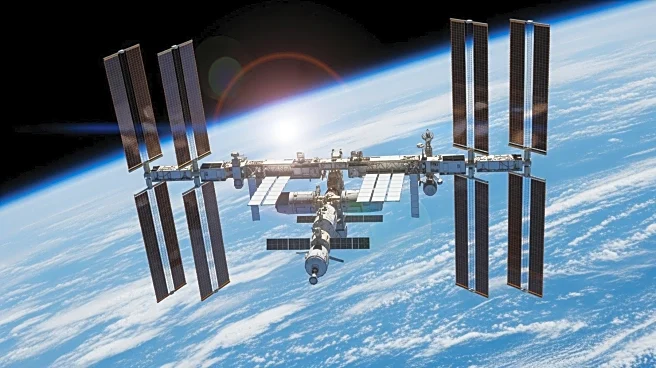
The International Space Station (ISS) has recently welcomed new crew members as part of Expedition 73. The crew, which includes astronauts from NASA, JAXA, and Roscosmos, is settling into their roles while conducting various scientific experiments and maintaining
the station's systems. Notably, NASA astronauts Zena Cardman and Jonny Kim are involved in the CIPHER human research study, which tracks astronauts' health before, during, and after spaceflight. Additionally, the crew is working with robotic free-flying assistants known as 'Astrobee' to enhance research capabilities. The station's systems are also being maintained, with activities such as inventory checks and equipment inspections being carried out. The ISS has been continuously crewed for over 25 years, marking a significant milestone in human space exploration.
Why It's Important?
The ongoing operations and research aboard the ISS are crucial for advancing human space exploration and understanding the effects of long-term space travel on human health. The experiments conducted, such as the CIPHER study, provide valuable data that can inform future missions, including potential journeys to Mars. The use of robotic assistants like Astrobee highlights the integration of technology to support astronauts in conducting complex research. The continuous presence of international crews on the ISS fosters global collaboration in space exploration, strengthening ties between space agencies and contributing to scientific advancements that benefit humanity. The maintenance and operation of the ISS also serve as a testament to the engineering and logistical capabilities required to sustain life in space.
What's Next?
As the new crew members acclimate to life aboard the ISS, they will continue to engage in scientific research and station maintenance. Future missions may focus on expanding the scope of research conducted in microgravity, potentially involving new technologies and international partnerships. The data collected from ongoing studies will be analyzed to improve the safety and efficiency of future space missions. Additionally, the ISS will continue to serve as a platform for testing new technologies and conducting experiments that cannot be performed on Earth, paving the way for deeper space exploration.