






What's Happening?
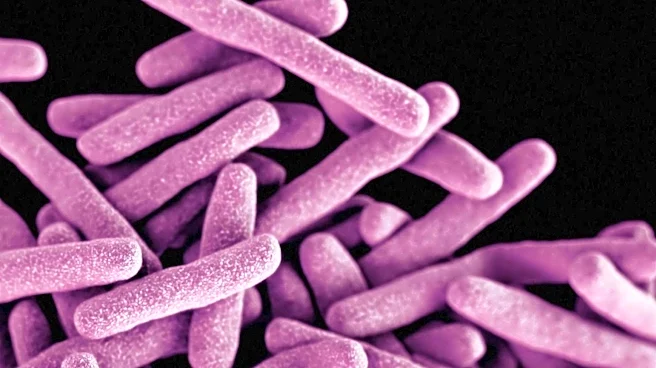
Researchers at the University of Massachusetts Amherst have made significant strides in tuberculosis treatment by developing a machine learning model to identify chemical compounds that can penetrate the bacterium Mycobacterium tuberculosis' outer membrane.
This bacterium is responsible for tuberculosis, the deadliest single-agent infection globally, causing 1.23 million deaths in 2024 according to the World Health Organization. The research, published in Nature Microbiology, highlights the challenges posed by the bacterium's unique dual membrane, which makes it resistant to many antimicrobial drugs. The team, led by Sloan Siegrist, PhD, and in collaboration with Marcos Pires, PhD, from the University of Virginia, has created the Mycobacterial Permeability neural Network (MycoPermeNet). This model uses data from a method called Peptidoglycan Accessibility Click-Mediated AssessmeNt (PAC-MAN) to predict the permeability of compounds through the mycomembrane based on their chemical structure.
Why It's Important?
This development is crucial as it addresses a significant barrier in tuberculosis treatment: the bacterium's resistant outer membrane. By using machine learning to predict which compounds can penetrate this barrier, the research could lead to the discovery of more effective drugs, potentially reducing the global burden of tuberculosis. The ability to screen compounds computationally rather than experimentally accelerates the drug discovery process, making it more efficient and cost-effective. This advancement not only holds promise for tuberculosis treatment but also sets a precedent for using artificial intelligence in tackling other drug-resistant infections, potentially transforming the landscape of infectious disease treatment.
What's Next?
The next steps involve further validation of the MycoPermeNet model and its application in real-world drug discovery processes. Researchers may collaborate with pharmaceutical companies to integrate this model into their drug development pipelines, potentially leading to the creation of new, effective tuberculosis treatments. Additionally, the model could be adapted to study other pathogens with similar membrane structures, broadening its impact. Continued research and development in this area could also attract funding and support from global health organizations aiming to combat drug-resistant diseases.