
What's Happening?
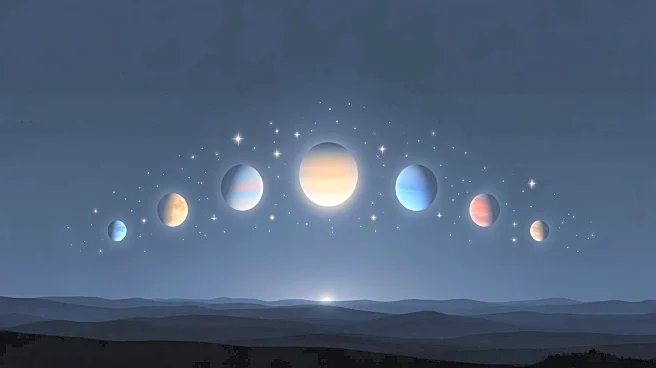
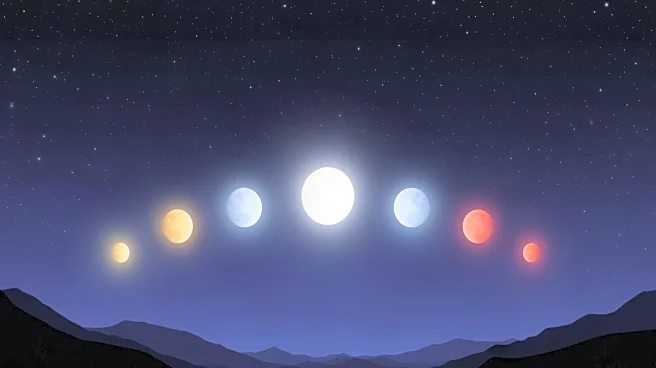
A rare astronomical event is set to occur as six planets in the solar system will align in the western sky just after sunset. The planets involved in this alignment are Mercury, Venus, Jupiter, Saturn, Uranus, and Neptune. While Uranus and Neptune will require
binoculars or a telescope to be seen, the other planets will be visible to the naked eye. This alignment is expected to reach its best position on Saturday, February 28. Although the planets will not form a perfect straight line, they will appear close together from Earth's perspective. Observers are advised to wait until after sunset to avoid eye damage, as the planets will be low in the western sky. Mercury and Venus will be the lowest and will quickly sink below the horizon, making the viewing window brief. The moon will also be visible near Jupiter and Uranus, adding to the spectacle.
Why It's Important?
This planetary alignment presents a unique opportunity for astronomy enthusiasts and the general public to witness a rare celestial event. Such alignments are infrequent, with the last similar occurrence happening in February of the previous year when Mars joined the lineup. The event highlights the dynamic nature of our solar system and offers educational opportunities for those interested in astronomy. It also serves as a reminder of the vastness and complexity of space, potentially inspiring interest in science and exploration. The alignment could have cultural significance as well, as celestial events have historically been associated with various myths and interpretations.
What's Next?
Weather conditions will play a crucial role in the visibility of this event. Forecasts suggest a break in the period of showers, with low-level offshore flow expected to clear the skies just in time for the alignment. However, the region's complex terrain, such as the Olympics, may obscure the view of the lower western skyline. To ensure a clear view, observers are encouraged to head to ocean beaches where the western horizon is unobstructed. This event may also prompt increased interest in astronomy-related activities and discussions, potentially leading to more public engagement with science.