



What's Happening?
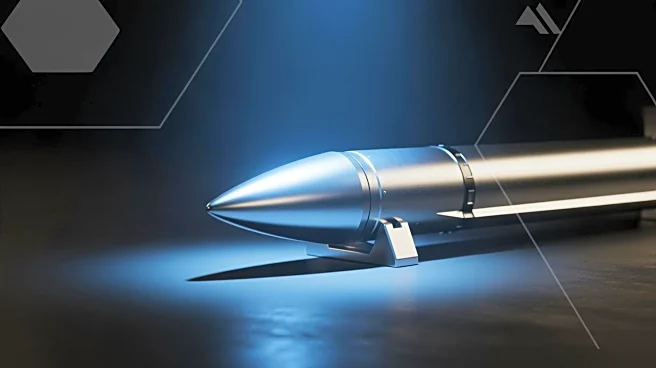
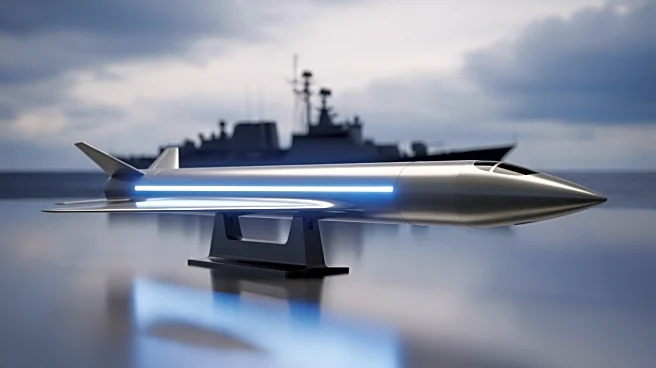
The U.S. Navy is actively seeking a new air-launched, long-range, anti-radiation missile, as announced by the Naval Air Systems Command (Navair) on February 19. This initiative aims to develop the Advanced Emission Suppression Missile (AESM) with enhanced
capabilities, including the ability to engage targets at significant standoff distances. The Navy plans to field this missile within two years, with a production demand of up to 300 units annually. The AESM is intended to be compatible with existing aircraft such as the Lockheed Martin F-35 and Boeing F/A-18E/F Super Hornet. This move comes as the Navy looks to upgrade or find alternatives to the current Northrop Grumman AGM-88G Advanced Anti-Radiation Guided Missile-Extended Range (AARGM-ER), which is expected to reach operational capability in 2026.
Why It's Important?
The development of the AESM represents a significant step in enhancing the U.S. Navy's missile capabilities, particularly in terms of range and target engagement. This initiative is crucial for maintaining technological superiority and operational readiness in the face of evolving global threats. The ability to produce up to 300 missiles annually indicates a substantial investment in defense capabilities, which could have implications for defense contractors and the broader military-industrial complex. Additionally, the potential for exporting the AESM could strengthen international defense partnerships and contribute to global security dynamics.
What's Next?
The Navy's interest in the AESM is part of a broader effort to refresh its missile arsenal, including the Coalition Heterogeneous Affordable Offensive Strike (CHAOS) missile program. As the Navy continues to solicit input from defense contractors, the development and testing phases will be critical in determining the AESM's effectiveness and integration into existing military frameworks. The outcome of these efforts will likely influence future defense strategies and budget allocations.