






What's Happening?
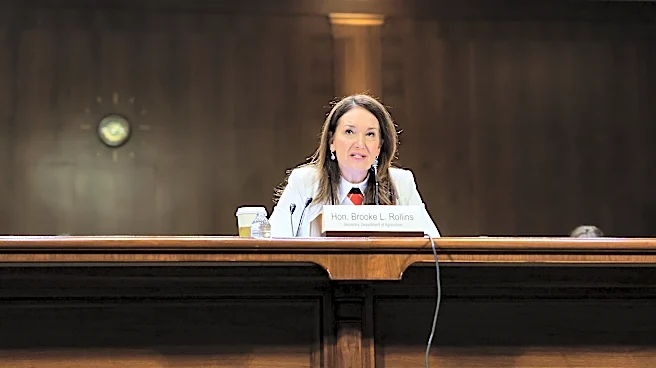
The U.S. Department of Agriculture (USDA) has announced a $5 million cooperative agreement with the Safe Summers Foundation. This funding, provided through USDA Rural Development, aims to help youth camps implement new safety standards. Agriculture Secretary
Brooke Rollins made the announcement, emphasizing the importance of child protection and preventing future tragedies. The Safe Summers Foundation was established by families affected by the deadly flash floods at Camp Mystic in Hunt, Texas, on July 4, 2025, which resulted in the deaths of 25 campers and two counselors. The funding will support the Safe Summers Fund, which offers grants and technical assistance to youth camps seeking to enhance their safety measures. Blake Bonner, co-founder of the Safe Summers Foundation, stated that these funds will enable camps nationwide to adopt life-saving safety protocols before the arrival of campers.
Why It's Important?
This USDA initiative is significant as it directly addresses youth safety in recreational settings, a critical concern for parents and communities. The $5 million allocation underscores a federal commitment to preventing tragedies similar to the Camp Mystic floods, which claimed 27 lives. By providing financial and technical assistance, the USDA is enabling youth camps, particularly those with limited resources, to upgrade their safety infrastructure and protocols. This can lead to a nationwide improvement in camp safety standards, potentially saving lives and offering greater peace of mind to families. The involvement of the Safe Summers Foundation, founded by those directly impacted by the Camp Mystic disaster, highlights a victim-led advocacy for systemic change, ensuring that the funding is directed towards practical and effective safety solutions.
What's Next?
The Safe Summers Foundation will begin distributing grants through its Safe Summers Fund to youth camps across the country. Camps seeking to implement new safety standards will be able to apply for financial or technical assistance. This initiative is expected to lead to a widespread adoption of enhanced safety measures in youth camps, including improved flood preparedness, emergency response plans, and staff training. Stakeholders, including camp operators, parents, and child safety advocates, will likely monitor the implementation and effectiveness of these new standards. The USDA may also track the impact of this funding to assess its success in reducing risks at youth camps and could potentially consider similar programs in the future if this initiative proves effective in preventing accidents and fatalities.
Beyond the Headlines
This funding goes beyond immediate safety improvements; it represents a broader societal effort to learn from past tragedies and proactively safeguard vulnerable populations. The collaboration between a federal agency like the USDA and a foundation born from personal loss exemplifies how public and private sectors can unite for a common cause. It also raises awareness about the inherent risks in outdoor recreational activities for youth and the need for continuous vigilance and adaptation of safety protocols in the face of environmental challenges, such as flash floods. The initiative could also spur a national conversation about standardized safety regulations for youth camps, potentially leading to more comprehensive legislative or regulatory frameworks to ensure consistent safety across all such facilities.