







What's Happening?
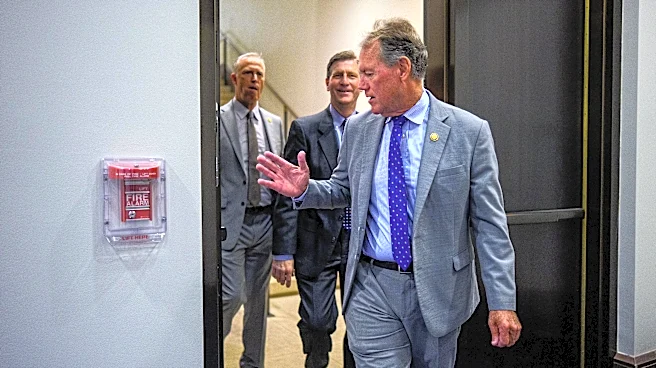
Rep. Buddy Carter (R-GA) has publicly supported the Guard Act, a legislative initiative aimed at directing national security agencies to evaluate potential risks posed by humanoid or quadruped robotics communications equipment. This support was voiced
during a House Communications and Technology Subcommittee markup on September 1. The Guard Act seeks to determine if such equipment presents an unacceptable risk to national security. Rep. Jennifer McClellan (D-VA) also highlighted the urgency of the bill, noting that Chinese robotics equipment is already entering domestic markets. Michael Robbins of the Association for Uncrewed Vehicle Systems International testified at a July 22 legislative hearing that the Guard Act specifically targets verified national security risks. This legislative push comes as FORT Robotics, a provider of safety infrastructure for autonomous machines, recently hired J.A. Green & Co. to lobby on defense issues, specifically those related to the National Defense Authorization Act (NDAA) and Appropriations.
Why It's Important?
The Guard Act is significant for U.S. national security and the burgeoning robotics industry. By mandating an assessment of risks from robotics communications equipment, the U.S. government aims to safeguard critical infrastructure and sensitive data from potential foreign exploitation, particularly from countries like China. This could lead to stricter regulations and procurement policies for robotics technology, impacting both domestic and international manufacturers. For U.S. companies like FORT Robotics, which serves defense clients, compliance with new security standards could become a competitive advantage, while foreign competitors might face increased scrutiny or barriers to entry. The focus on the NDAA and Appropriations suggests that the government is prepared to allocate resources and establish legal frameworks to address these technological security concerns, potentially shaping the future landscape of robotics development and deployment in the U.S. and its allies.
What's Next?
The Guard Act will likely proceed through the legislative process, potentially leading to its inclusion in future defense authorization or appropriations bills. If enacted, national security agencies will be tasked with conducting comprehensive risk assessments of robotics communications equipment. This could result in the development of new standards, certifications, or restrictions on the use of certain robotics technologies, especially those from identified high-risk nations. The lobbying efforts by companies like FORT Robotics indicate that industry stakeholders are actively engaging with policymakers to influence the outcome and ensure their interests are represented. The ongoing debate and eventual implementation of such legislation will shape the operational environment for robotics companies and the broader defense sector, potentially leading to increased investment in secure, domestically produced robotics solutions.
Beyond the Headlines
Beyond immediate security concerns, the Guard Act highlights a broader geopolitical competition in advanced technologies. The emphasis on assessing risks from foreign robotics equipment, particularly from China, underscores a strategic effort by the U.S. to maintain technological superiority and protect its supply chains. This legislative move could accelerate the decoupling of technology ecosystems, pushing for greater self-reliance in critical areas like robotics. It also raises ethical considerations regarding the use of autonomous machines and the potential for dual-use technologies to be weaponized or exploited. The long-term implications could include a reorientation of global technology partnerships, increased domestic innovation in secure robotics, and a more fragmented international market for advanced technological goods, driven by national security imperatives.