




What's Happening?
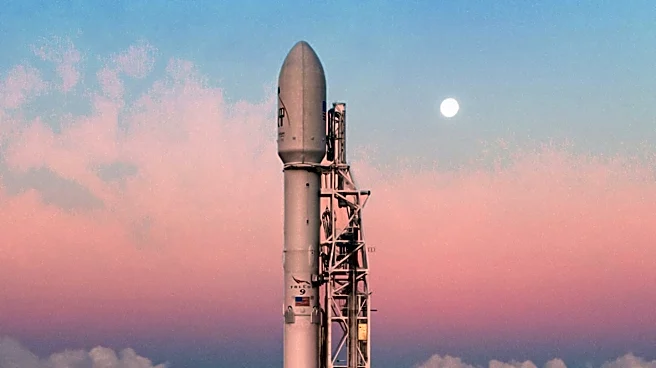
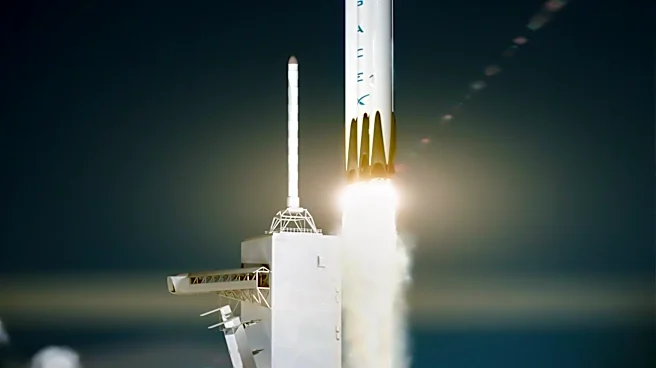
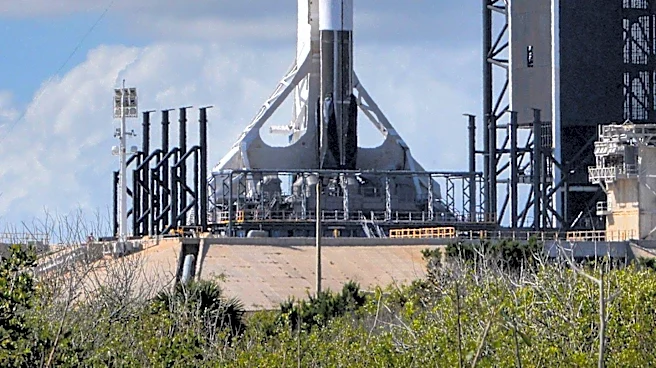
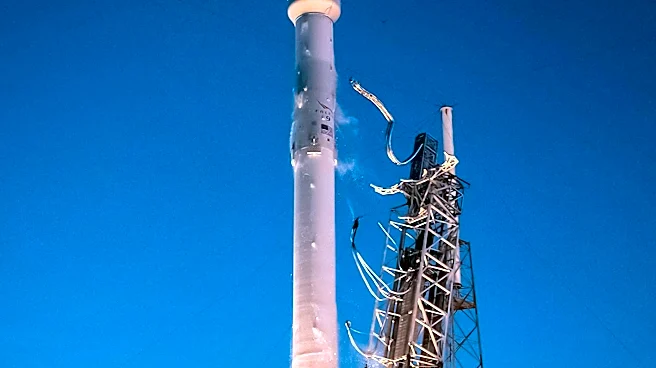
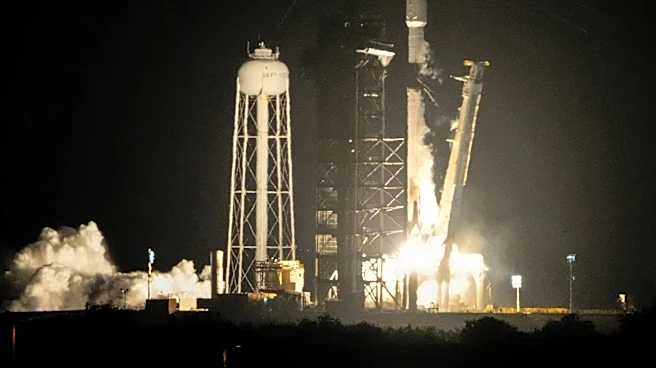
A spent SpaceX Falcon 9 upper stage is set to collide with the Moon on August 5, 2026. This stage, identified as 2025-010D, was used to launch Firefly Aerospace’s Blue Ghost Mission 1 and ispace’s Resilience lander in January 2025. The impact is expected
to occur near Einstein Crater on the Moon’s sunlit western limb at a speed of approximately 5,400 mph. The collision poses no threat to Earth or current lunar missions but provides a unique opportunity for scientific study. Researchers from NASA and South Korea’s Danuri orbiter plan to capture before-and-after images of the impact site to study crater formation and debris models.
Why It's Important?
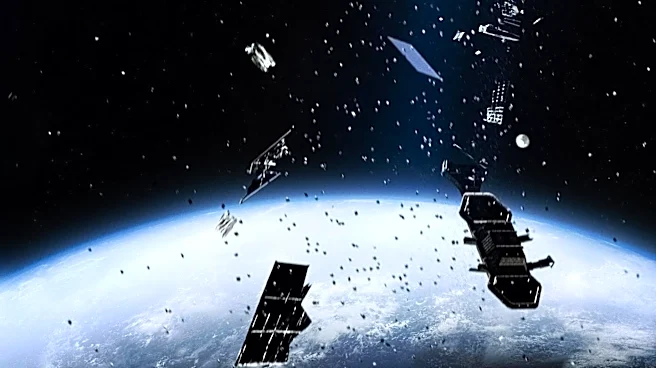
The impending impact of the Falcon 9 upper stage on the Moon is significant for several reasons. It offers a rare chance to study the effects of such collisions on the lunar surface, which can enhance our understanding of crater formation and the behavior of debris in space. As lunar traffic increases with more missions planned, understanding these dynamics becomes crucial for future lunar exploration and potential colonization. The data collected could inform the design of future missions and help mitigate risks associated with space debris.
What's Next?
Following the impact, researchers will analyze the data collected by the Lunar Reconnaissance Orbiter and Danuri orbiter to assess the impact's effects. This analysis will contribute to refining models of crater formation and debris dispersion. The findings could influence future mission planning and the development of strategies to manage space debris, particularly as lunar exploration activities intensify.