



What's Happening?
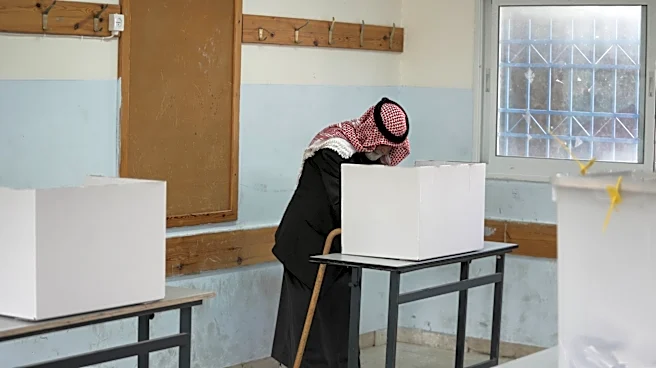
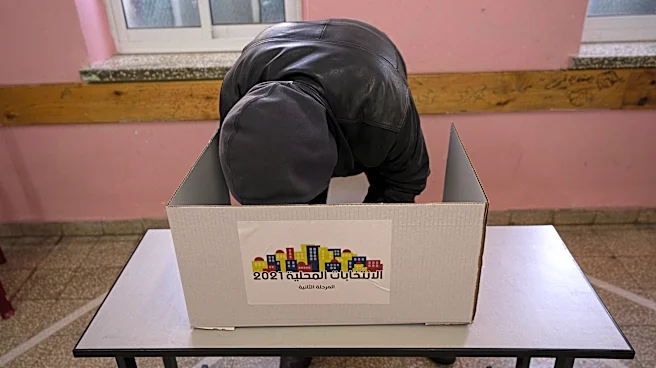
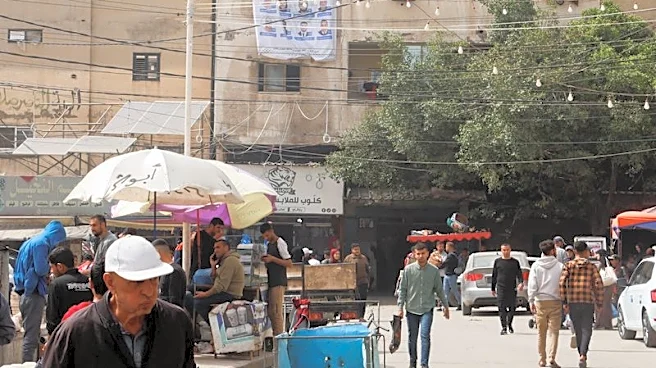
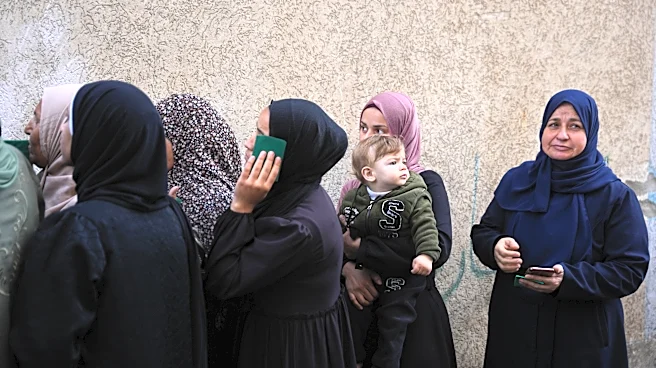
Palestinian authorities have declared the recent local elections in Gaza's Deir al Balah and the West Bank a success. These elections, held for the first time in over two decades in parts of Gaza, are seen as a step towards a long-delayed presidential
election and eventual statehood. The elections in Deir al Balah faced challenges such as low turnout, with only 23% participation, due to large-scale displacement and outdated civil registry records. In contrast, the West Bank saw a 56% turnout. The elections were dominated by independents and Fatah, the faction leading the Palestinian Authority. Hamas, which controls parts of Gaza, did not participate or obstruct the elections. The elections were for local councils responsible for infrastructure like water and electricity.
Why It's Important?
These elections are significant as they represent a move towards political unity and potential statehood for Palestinians. The elections are a response to international pressure for reforms and are seen as a reflection of national unity. However, the Palestinian Authority has not held a presidential election in 21 years, and support for it has waned due to corruption and the ongoing conflict with Israeli settlers. The elections are a symbolic step towards greater political engagement and autonomy for Palestinians, but they also highlight the ongoing challenges of political fragmentation and external opposition, particularly from Israel, which opposes a Palestinian state.
What's Next?
The Palestinian Authority hopes to hold further elections across the Gaza Strip and eventually conduct presidential and legislative elections. However, the path forward is fraught with challenges, including political fragmentation and opposition from Israel. The success of these local elections could pave the way for more comprehensive political reforms and greater autonomy for Palestinians. The international community will likely continue to monitor the situation closely, as the outcome could have significant implications for regional stability and the broader Middle East peace process.