





What's Happening?
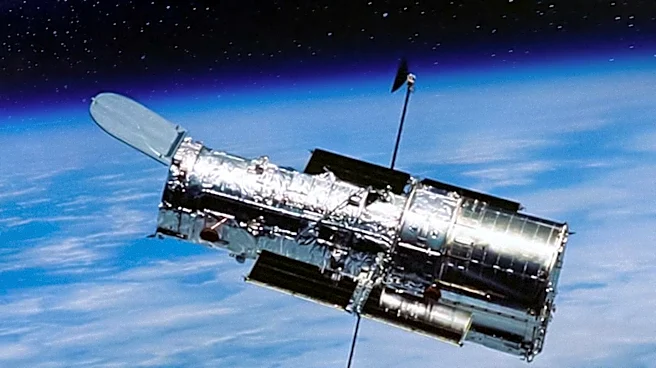
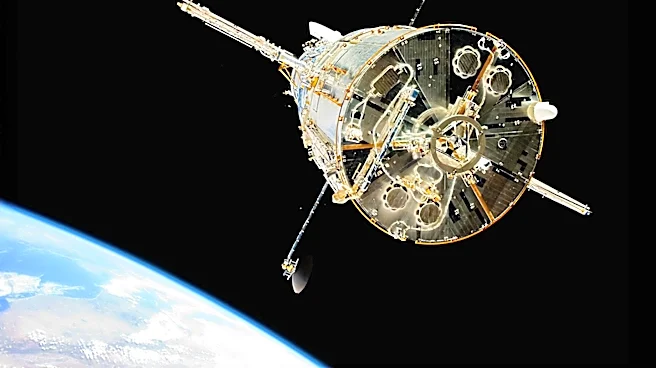
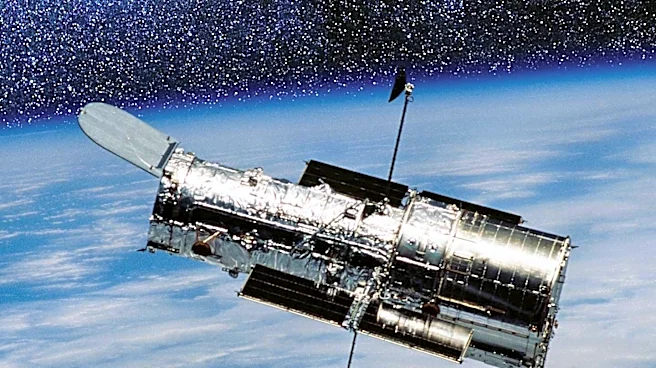
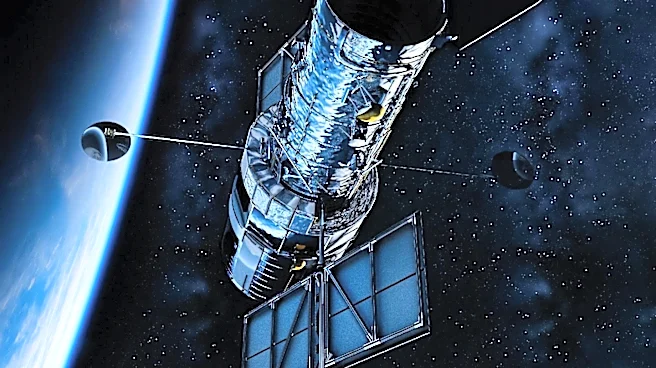
NASA has issued a Request for Information (RFI) to commercial companies, seeking innovative ideas for extending the operational life of the Hubble Space Telescope (HST). The RFI, released on October 29, aims to identify industry capabilities for in-space
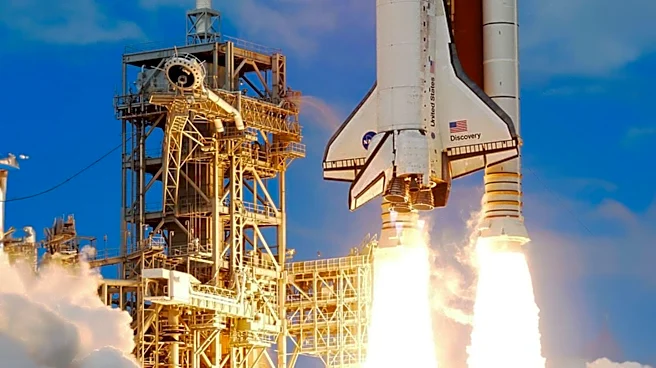
servicing, including reboosting Hubble's orbit, enhancing its performance, or guiding it to a controlled reentry. The telescope, after 36 years in orbit, is gradually losing altitude and is projected to reenter Earth's atmosphere in the early-to-mid 2030s without intervention. NASA requires that any proposed mission must not harm the HST and should occur by 2032, with the contractor responsible for providing the launch vehicle, servicing spacecraft, mission operations, and potentially a crew. The last time Hubble's orbit was raised was in 2002 during a Space Shuttle Columbia servicing mission, and the final shuttle servicing flight in 2009 did not include a reboost.
Why It's Important?
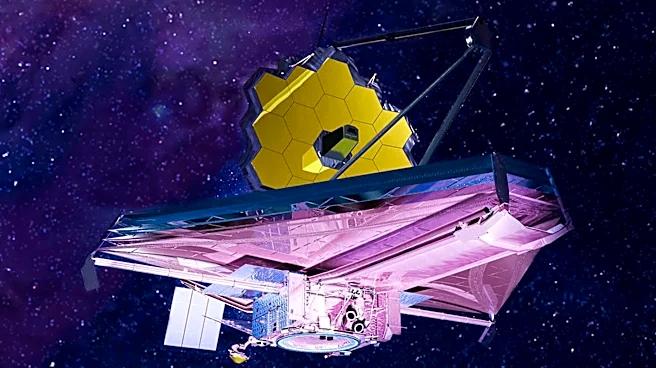
The Hubble Space Telescope remains a crucial scientific instrument, providing unique observations in visible and ultraviolet light that complement newer infrared observatories like the Webb and Roman telescopes. Its potential loss in the next decade would create a significant gap in astronomical research, as a direct replacement with similar capabilities, the Habitable Worlds Observatory, is not expected until the 2040s. Extending Hubble's mission would allow for continued groundbreaking discoveries and further our understanding of the universe. This initiative also highlights NASA's increasing reliance on commercial space capabilities for complex missions, potentially fostering innovation and growth within the private space sector. A successful commercial servicing mission could set a precedent for future maintenance and life extension of other valuable space assets, impacting the long-term sustainability of space exploration and scientific research.
What's Next?
Commercial companies have until November 30 to submit their responses to NASA's Request for Information. While NASA is not yet committing to a specific rescue mission, the agency is evaluating the feasibility, cost, and realistic chances of success for various proposals. The information gathered will help NASA understand the current state of commercial in-space servicing capabilities and inform future decisions regarding Hubble's fate. Depending on the proposals received and the ongoing orbital dynamics predictions, which can be influenced by solar activity, NASA may proceed with further steps, such as issuing a formal solicitation for a servicing mission. A successful reboost to NASA's desired altitude of at least 373 miles (600 km) could extend Hubble's operational life by at least 25 more years, pushing its reentry date well into the mid-21st century.
Beyond the Headlines
This RFI underscores a broader shift in space operations, moving towards a model where commercial entities play a more significant role in maintaining and extending the life of government-owned space assets. The challenge of servicing Hubble, a complex and aging observatory, presents a unique opportunity for the private sector to demonstrate advanced in-space capabilities, including rendezvous, grappling, and refueling technologies. Success in such a mission could not only save a national scientific treasure but also catalyze the development of a robust in-space servicing economy, offering solutions for satellite life extension, debris removal, and even on-orbit assembly. The ethical considerations of preserving historical scientific instruments versus investing in new technologies also come into play, as decisions about Hubble's future will influence resource allocation for future space science missions.