
What's Happening?
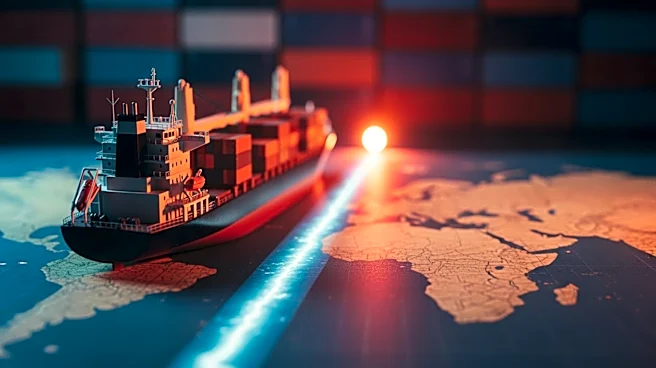
A significant shift in global shipping patterns is occurring as major shipping companies are diverting vessels away from the Suez Canal and the Red Sea, opting for the longer route around southern Africa.
This change is driven by escalating tensions in the Middle East, particularly involving military exchanges between Iran, the United States, and Israel. The detour adds at least two weeks to voyages between Asia and Europe. The Suez Canal has been under pressure since 2023 due to attacks by Yemen's Houthi militants on commercial vessels. Although a ceasefire briefly encouraged some operators to reconsider the shorter route, renewed hostilities have reversed this trend. As a result, freight costs have increased, with container rates along the Cape route rising significantly.
Why It's Important?
The rerouting of shipping traffic has significant implications for global trade and logistics. The increased freight costs could lead to higher prices for goods transported between Asia and Europe, affecting businesses and consumers. The shift also impacts port activity in southern Africa, with ports like Walvis Bay and Durban experiencing increased demand. This change highlights the vulnerability of global supply chains to geopolitical tensions and the need for businesses to adapt to changing circumstances. The situation underscores the importance of stability in key maritime routes for the smooth functioning of international trade.
What's Next?
Shipping companies are likely to continue using the longer route around southern Africa until stability returns to the Middle East. This could lead to further increases in freight costs and continued pressure on southern African ports. The situation may prompt discussions among international stakeholders about ensuring the security of key maritime routes. Additionally, businesses may explore alternative logistics strategies to mitigate the impact of increased shipping times and costs.