






What's Happening?
The Israeli Defense Forces (IDF) are strategically positioned at Beaufort Castle in southern Lebanon, preparing for potential actions by Hezbollah. The castle, a historical site with significant military value, was recently reclaimed by the IDF's 36th
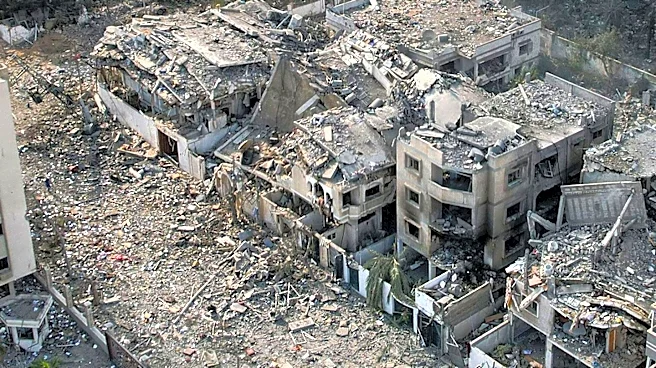
Division as part of a broader maneuver towards Nabatiya. This operation follows Hezbollah's decision to re-engage in conflict with Israel, backed by Iran. The IDF's presence aims to prevent Hezbollah from reverting to guerrilla tactics that previously forced Israeli withdrawal from the region. The area around Beaufort Castle, including the Shia villages, shows signs of depopulation, a result of Israel's strategy to remove civilian support for Hezbollah fighters. The IDF has also uncovered and begun dismantling an extensive network of Iranian-built tunnels used by Hezbollah, highlighting the ongoing military tension in the region.
Why It's Important?
The IDF's actions at Beaufort Castle are crucial in maintaining Israel's security and deterring Hezbollah's influence in southern Lebanon. The strategic location of the castle allows Israel to monitor and control movements along the Litani River, a critical area for military operations. The discovery and destruction of Hezbollah's tunnel systems underscore the group's sophisticated military capabilities and the ongoing threat they pose to Israeli security. This development is part of a larger geopolitical struggle involving Iran's influence in the region, which has implications for U.S. foreign policy and its allies' security strategies. The situation also affects the stability of Lebanon, a country already facing significant political and economic challenges.
What's Next?
The IDF is likely to continue its operations to secure the region and prevent Hezbollah from regaining a foothold. This includes further dismantling of tunnel networks and maintaining a strong military presence. The potential for renewed conflict remains high, with Hezbollah reportedly rebuilding and rearming. The international community, particularly the U.S. and its allies, will be closely monitoring the situation, as any escalation could have broader implications for Middle Eastern stability. Diplomatic efforts may be pursued to de-escalate tensions, but the effectiveness of such measures remains uncertain given the complex dynamics at play.
Beyond the Headlines
The ongoing conflict at Beaufort Castle highlights the broader issue of proxy wars in the Middle East, where regional powers like Iran use groups like Hezbollah to exert influence. This situation raises ethical questions about the impact on civilian populations, who often bear the brunt of military strategies aimed at removing support for guerrilla fighters. The use of advanced tunnel systems by Hezbollah also points to the evolving nature of warfare, where underground networks play a significant role in military tactics. The IDF's operations may set a precedent for how modern armies address such challenges in asymmetric warfare.