



What's Happening?
A shepherd in Patagonia has discovered fossils of a 65-foot dinosaur, named Bicharracosaurus dionidei, which do not fit into any recognized dinosaur group. The fossils, found in the Cañadón Calcáreo Formation, date back 155 million years and exhibit a mix
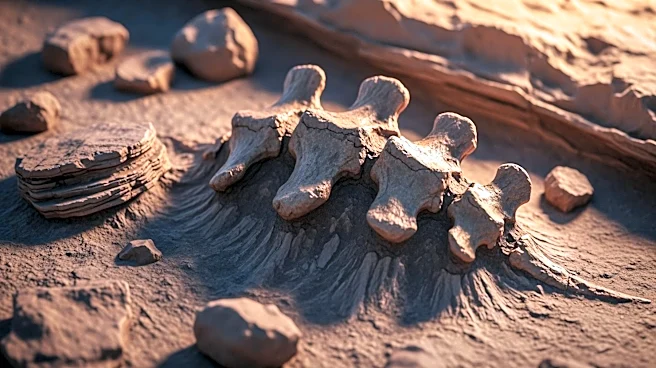
of features from both brachiosaurids and diplodocids. This discovery is significant as it represents the first Jurassic brachiosaurid identified in South America. The research, published in PeerJ, highlights the importance of the find in understanding the evolution of sauropods in the Southern Hemisphere. The fossils include more than 30 vertebrae, ribs, and part of the pelvis, providing new insights into the diversity of sauropods during the Jurassic period.
Why It's Important?
The discovery of Bicharracosaurus dionidei is crucial for paleontology as it fills gaps in the fossil record of the Southern Hemisphere, particularly in the ancient supercontinent Gondwana. This find challenges existing classifications of sauropods and provides new information on their evolutionary history. The unique combination of traits in this dinosaur could lead to a reevaluation of sauropod classification and enhance our understanding of dinosaur evolution. The discovery also underscores the potential for further significant paleontological finds in Patagonia, a region already known for major dinosaur discoveries.
What's Next?
The fossils of Bicharracosaurus dionidei will undergo further study to better understand its place in the dinosaur family tree. Researchers will continue to explore the Cañadón Calcáreo Formation and other sites in Patagonia for additional fossils that could provide more context about the Jurassic ecosystems in Gondwana. The findings may lead to new theories about sauropod evolution and migration patterns. Continued research in this area could also reveal more about the environmental conditions and biodiversity of the Jurassic period in the Southern Hemisphere.