


What's Happening?
The Democratic Socialists of America (DSA) has experienced a significant increase in national media presence, particularly following Zohran Mamdani’s mayoral victory in New York and subsequent congressional wins across multiple cities. This heightened
visibility, coupled with the release of their 'Workers Deserve More' program, has drawn considerable attention from various political figures and media outlets, ranging from Fox News hosts to prominent Democrats like James Carville and Nancy Pelosi, and even President Trump. The organization notes that this focus, while exciting and indicative of their vision resonating with working people, also presents a threat from established power brokers. The DSA perceives much of the media dialogue surrounding them as dishonest and out of touch with public sentiment, citing instances like a U.S. Department of State report labeling Cuba as 'The Capital of 21st Century Communism' which also contained numerous mentions of the DSA.
Why It's Important?
The increased national media attention on the Democratic Socialists of America signifies a growing political polarization and a potential shift in the American political landscape. The organization's ability to gain traction and media coverage, despite criticism from both conservative and moderate political figures, suggests a broader appeal of their socialist vision among certain segments of the working class. This development is important because it highlights the ongoing ideological battle within U.S. politics, where established parties and media outlets are reacting to the rise of a movement that challenges traditional capitalist structures. The DSA's interpretation of this scrutiny as a 'threat to capitalists and established power brokers' underscores the perceived stakes for various economic and political stakeholders. The narrative being shaped around the DSA, whether positive or negative, will likely influence public opinion and future political discourse, potentially impacting electoral outcomes and policy debates.
What's Next?
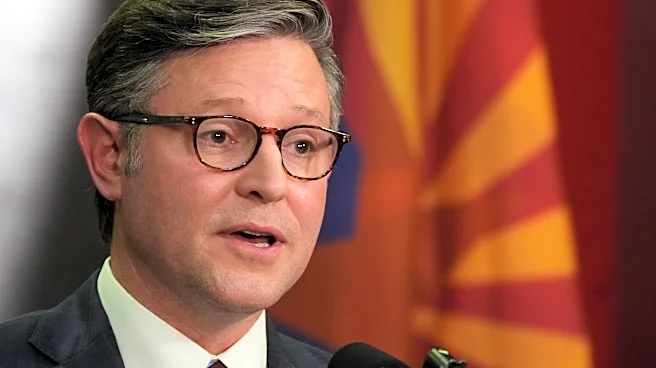
The Democratic Socialists of America anticipates continued scrutiny and attempts by political opponents to undermine their movement, drawing parallels to a '21st-century version of the 1950s Red Scare.' They expect figures like Speaker of the House Mike Johnson and President Trump to continue framing the DSA as a threat to American families, aiming to 'manufacture consent to treat political opponents as terrorists.' In response, the DSA plans to leverage its media infrastructure and the decentralized nature of online media to counter what they view as anti-socialist narratives. They aim to invest further in their communications apparatus, boost their podcasts into videocasts, syndicate articles from caucus blogs to broader audiences, and recruit and train spokespeople to articulate their principles. The organization believes that by creating a positive vision of socialism, they can capitalize on the perceived disconnect between corporate media and the working class, filling a vacuum in independent media.
Beyond the Headlines
The intense focus on the Democratic Socialists of America reveals deeper implications regarding free speech, political dissent, and the power of media in shaping public perception in the U.S. The DSA's concern about their political opponents attempting to 'manufacture consent' to label them as 'terrorists' raises ethical questions about the weaponization of rhetoric in political discourse. This situation also highlights the evolving media landscape, where traditional outlets are being challenged by independent and decentralized platforms. The DSA's strategy to counter negative narratives by amplifying their own voices through various media channels reflects a broader trend of political movements seeking to control their messaging directly. This struggle for narrative control has significant cultural implications, as it influences how different ideologies are understood and accepted by the American public, potentially leading to long-term shifts in political engagement and social values.