

What's Happening?
Sweden's Prime Minister, Ulf Kristersson, has acknowledged that the country is engaging in preliminary discussions with nuclear-armed European powers, specifically France and the United Kingdom. This development comes as Sweden, a nation historically
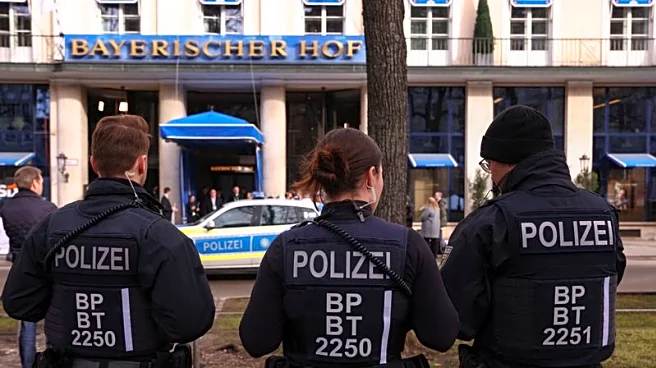
known for its neutrality and anti-nuclear stance, reassesses its defense strategies in light of recent geopolitical tensions, particularly Russia's invasion of Ukraine. Sweden joined NATO two years ago, marking a significant shift in its defense policy. The discussions are part of a broader European dialogue on enhancing nuclear deterrence capabilities, leveraging the existing arsenals of Britain and France. These talks are taking place against the backdrop of the Munich Security Conference, where European leaders are contemplating a future with diminished American influence in global security matters.
Why It's Important?
The discussions signal a potential shift in European defense dynamics, with countries like Sweden reconsidering their reliance on the U.S. nuclear umbrella. This move could lead to a more autonomous European defense posture, particularly in nuclear deterrence. The involvement of Sweden, a country with a strong anti-nuclear history, underscores the changing security landscape in Europe. The potential for a collective European nuclear deterrent could alter the balance of power within NATO and affect U.S.-European relations. As the U.S. encourages European nations to take more responsibility for their defense, these discussions could lead to significant policy changes and impact the strategic calculations of both European and global powers.
What's Next?
The outcome of these discussions could lead to a more integrated European nuclear strategy, potentially involving coordinated planning between Britain and France. This could also prompt other European nations to reconsider their defense policies. The ongoing war in Ukraine will likely influence the pace and direction of these talks, as European countries assess the threat posed by Russia. Additionally, the expiration of the New START treaty between the U.S. and Russia adds urgency to these discussions, as European nations seek to ensure their security in a potentially less stable global environment.
Beyond the Headlines
The discussions reflect a broader trend of European nations seeking greater autonomy in defense matters, which could lead to a reevaluation of the transatlantic alliance. The potential for a European nuclear deterrent raises ethical and strategic questions about nuclear proliferation and the future of arms control. As Europe navigates these complex issues, the balance between maintaining peace and ensuring security will be a critical challenge. The historical context of Sweden's past nuclear ambitions and its current strategic considerations highlight the evolving nature of international security dynamics.