





What's Happening?
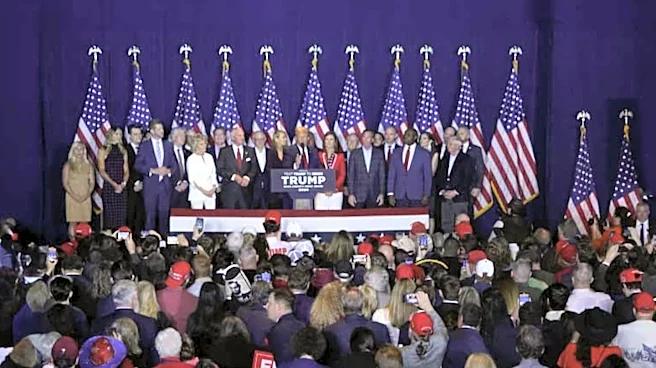
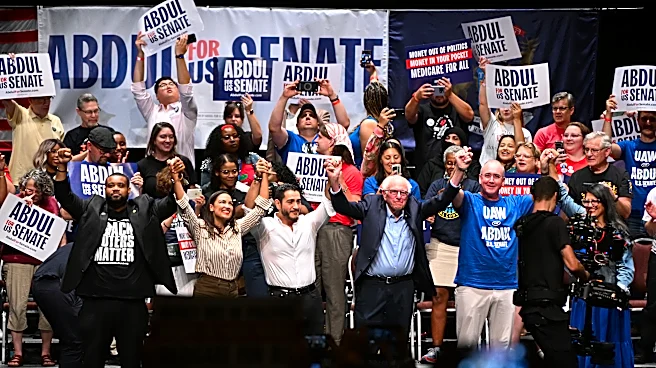
A recent poll conducted by CNBC reveals that democratic socialist candidates are perceived as less of a liability compared to those associated with the MAGA movement or endorsed by President Trump. The poll indicates that while 50% of voters are less likely
to support a democratic socialist candidate, the numbers are worse for Trump-endorsed and MAGA candidates, with 52% and 57% of voters, respectively, expressing reluctance. This data suggests that the Republican strategy of using democratic socialism as a political boogeyman may not be as effective as anticipated. The poll also highlights a shift in public sentiment, with a declining percentage of Americans expressing strong opposition to democratic socialist leaders.
Why It's Important?
The findings of this poll have significant implications for the political strategies of both major parties in the U.S. As the 2026 midterm elections approach, the Republican Party may need to reconsider its focus on democratic socialism as a central campaign issue, given its diminishing impact on voter sentiment. Instead, the data suggests that the MAGA movement and Trump endorsements may pose greater challenges for the GOP, potentially alienating swing voters. For the Democratic Party, the growing acceptance of democratic socialism could signal an opportunity to embrace more progressive policies without fearing substantial voter backlash. This shift in voter attitudes could influence campaign strategies and policy priorities in the lead-up to the elections.
What's Next?
In response to these findings, political parties may need to adjust their campaign strategies to better align with voter sentiments. The Republican Party might focus on addressing the concerns associated with the MAGA movement and Trump endorsements to mitigate potential voter alienation. Meanwhile, the Democratic Party could leverage the growing acceptance of democratic socialism to appeal to progressive voters while maintaining a broad coalition. As the midterm elections draw closer, both parties will likely intensify efforts to engage and mobilize their respective bases, with particular attention to swing voters who could determine the election outcomes. The evolving political landscape will require adaptive strategies to effectively address voter concerns and preferences.