



What's Happening?
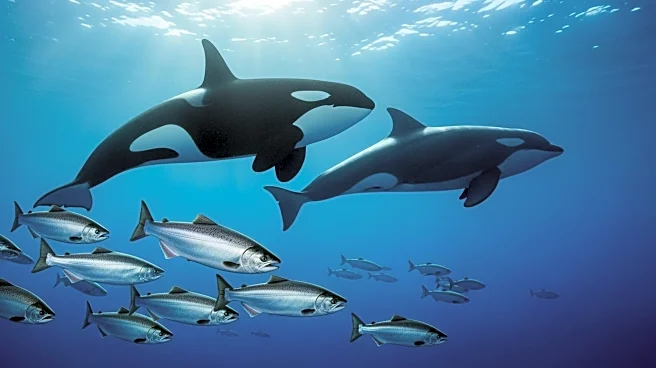
In a study published in the journal Scientific Reports, researchers observed a unique collaboration between northern resident orcas and Pacific white-sided dolphins off the coast of British Columbia. The study, conducted in August 2020, documented the two
species working together to hunt large Chinook salmon. The orcas were seen changing their course to follow the dolphins, utilizing their echolocation calls to locate the salmon. In return, the dolphins benefited from the orcas' hunting prowess, gaining access to salmon scraps. This mutualistic behavior was captured on video, marking the first time such cooperation has been documented. The study involved the use of drones and tracking devices to gather data on the animals' movements and interactions.
Why It's Important?
This discovery sheds light on the complex social behaviors and interspecies interactions in marine environments. The collaboration between orcas and dolphins suggests a level of communication and mutual benefit that challenges previous understandings of predator-prey dynamics. For marine biologists and ecologists, these findings could influence conservation strategies, particularly in regions where these species coexist. The study highlights the importance of preserving marine habitats that support such interactions, which could be crucial for the survival of both species amid changing ocean conditions.
What's Next?
Further research is needed to understand the full extent and implications of this interspecies cooperation. Scientists may explore whether similar behaviors occur in other regions or with different species. The findings could prompt a reevaluation of how marine ecosystems are managed, potentially influencing policies aimed at protecting these environments. Additionally, the study may inspire new technologies or methodologies for observing and understanding marine life interactions.
Beyond the Headlines
The observed behavior raises questions about the cognitive abilities of both orcas and dolphins, suggesting a level of intelligence and adaptability that may have been underestimated. This cooperation could also have cultural implications, as it may indicate learned behaviors passed down through generations. Understanding these dynamics could provide insights into the evolution of social behaviors in marine mammals.