

What's Happening?
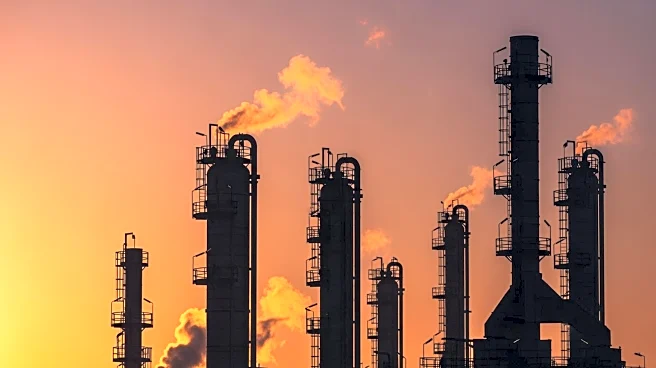
Several Asian oil refineries and petrochemical companies have reduced their operations due to escalating conflict in the Middle East, which has disrupted crude and feedstock exports. The conflict has led to a shortage of naphtha feedstock, prompting companies to declare
force majeure on petrochemical supplies. In China, major refineries like Zhejiang Petrochemical Corp and Fujian Refining and Petrochemical Co have shut down units, while in India, Mangalore Refinery and Petrochemicals has also reduced operations. South Korean and Singaporean companies have similarly declared force majeure, affecting supply chains across Asia.
Why It's Important?
The reduction in refinery operations highlights the vulnerability of global supply chains to geopolitical tensions. The Middle East is a critical supplier of crude oil and feedstock, and disruptions in this region can have widespread economic impacts. The forced reduction in operations could lead to increased prices for petrochemical products and affect industries reliant on these materials. This situation underscores the need for diversification of supply sources and the development of alternative energy strategies to mitigate the impact of such geopolitical events.
What's Next?
As the conflict continues, companies will need to navigate the challenges of maintaining operations with limited feedstock. This may involve seeking alternative suppliers or adjusting production strategies to manage shortages. Governments and industry leaders may also need to consider long-term strategies to reduce dependency on Middle Eastern oil and enhance energy security. The situation could prompt further discussions on energy diversification and investment in renewable energy sources to reduce the impact of similar disruptions in the future.