






What's Happening?
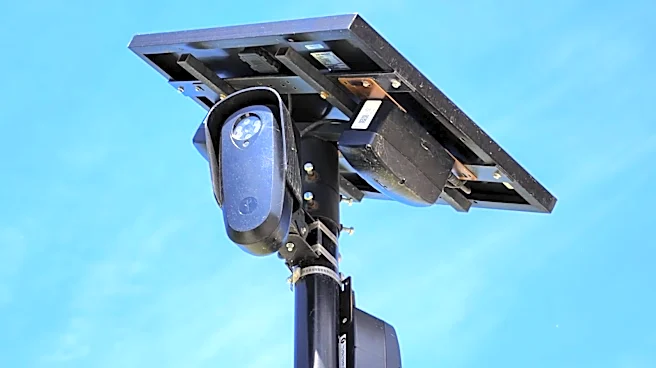
Texas Governor Greg Abbott has issued an order directing the Department of Transportation to cease issuing new permits for the installation of Flock cameras and other automated license plate readers (ALPRs) on state roads. This directive comes amidst
ongoing discussions regarding privacy and surveillance technologies. The Texas Department of Public Safety currently operates approximately 900 such cameras across the state. The governor's order specifically targets the expansion of these systems by preventing the issuance of additional permits, indicating a pause in the proliferation of new ALPR installations on state-controlled roadways. This action reflects a growing concern over the use and oversight of surveillance technologies by various entities within the state.
Why It's Important?
This decision by Governor Abbott carries significant implications for privacy advocates and law enforcement agencies in Texas. For privacy advocates, the halt on new ALPR permits is a partial victory, as it limits the expansion of a technology that can track vehicle movements and potentially compile extensive databases of citizens' travel patterns. This aligns with broader national debates about the balance between public safety and individual civil liberties. For law enforcement, while the Texas Department of Public Safety already utilizes a substantial number of these cameras, the inability to install new ones could impact future surveillance strategies and resource allocation. The move also signals a potential shift in the state's approach to technology-driven policing, possibly prompting a reevaluation of existing ALPR policies and their effectiveness versus their societal impact. The decision could also influence other states considering similar measures regarding surveillance technology.
What's Next?
Following Governor Abbott's order, the Texas Department of Transportation will likely implement procedures to halt the issuance of new ALPR permits. This could lead to a period of review for existing ALPR policies and their legal frameworks. Stakeholders, including civil liberties organizations and law enforcement groups, may engage in further discussions or lobbying efforts to either solidify this moratorium or advocate for its reversal. The long-term implications could include legislative action to either permanently restrict or more clearly regulate the use of ALPRs in Texas. Additionally, other states might observe Texas's actions as a precedent, potentially leading to similar policy changes regarding surveillance technologies on their roadways. The debate over privacy versus public safety in the context of ALPRs is expected to continue.
Beyond the Headlines
The governor's order touches upon deeper societal questions regarding the extent of government surveillance in a democratic society. While ALPRs are often justified as tools for crime prevention and apprehension, their pervasive nature raises concerns about the potential for misuse, data breaches, and the creation of a 'surveillance state.' The ethical implications extend to how data collected by these cameras is stored, accessed, and shared, and whether adequate safeguards are in place to prevent abuse. This decision could spark a broader conversation about the need for comprehensive legislation to govern all forms of automated surveillance, ensuring transparency, accountability, and respect for individual rights. It highlights the ongoing tension between technological advancement and the preservation of fundamental freedoms in the digital age.