






What's Happening?
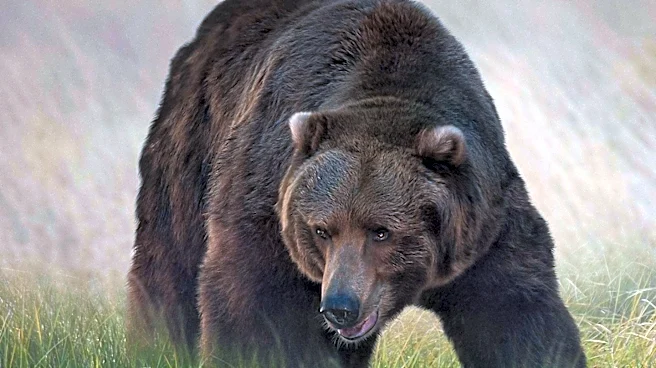
California's black bear population is increasingly being observed in lower elevation communities, with sightings reported in areas like Roseville, Rocklin, Granite Bay, and Pollock Pines. For instance, a yearling black bear was seen in Roseville and Rocklin, and an adult
female with two young cubs was confirmed in Granite Bay, indicating that these cubs were born in suburban areas rather than migrating from higher mountain habitats. In July, security cameras captured a mother bear with quadruplets in Pollock Pines. According to Arjun Dheer, CDFW’s Statewide Black Bear Coordinator, these movements are partly natural dispersal, with bears using river corridors and open spaces to travel through developed areas. Alexia Ronning, a CDFW human-bear conflict biologist, notes that black bears are highly adaptable and can thrive in various habitats.
Why It's Important?
California is home to an estimated 61,000 black bears, the largest population in the continental U.S., coexisting with a human population of 40 million. This increasing overlap between human and bear habitats presents significant management challenges. The presence of bears in suburban areas raises concerns about public safety and property damage, while also highlighting the need for effective wildlife management strategies. The California Department of Fish and Wildlife (CDFW) emphasizes proactive measures to prevent conflicts, as one unsecured food source can attract bears and encourage behaviors that endanger both people and bears. Educating residents, local law enforcement, and animal control officers on best practices is crucial for mitigating these risks.
What's Next?
The CDFW is actively working to educate communities on how to prevent human-bear conflicts. They encourage Californians to follow the 'Six At-Home BearWise Basics,' which include never feeding or approaching bears, securing food, garbage, and recycling, removing bird feeders when bears are active, never leaving pet food outdoors, cleaning and storing grills and smokers, and alerting neighbors to bear activity. Consistent community-wide action is vital to prevent bears from becoming habituated to human food sources. The CDFW also provides resources like an updated black bear range map and a Black Bear Conservation and Management Plan for California, and advises contacting emergency personnel if a bear poses an immediate public safety threat.
Beyond the Headlines
The expansion of black bears into lower elevation communities in California reflects broader ecological shifts and the impact of human development on wildlife. As urban and suburban areas encroach on natural habitats, wildlife species like bears are forced to adapt, often leading to increased human-wildlife interactions. This trend necessitates a re-evaluation of land use planning and conservation efforts to ensure sustainable coexistence. It also highlights the importance of public engagement and responsible behavior in managing wildlife populations. The success of these efforts will depend on a balanced approach that considers both human safety and the long-term health of bear populations, potentially influencing future policies on urban development and wildlife corridors.