




What's Happening?
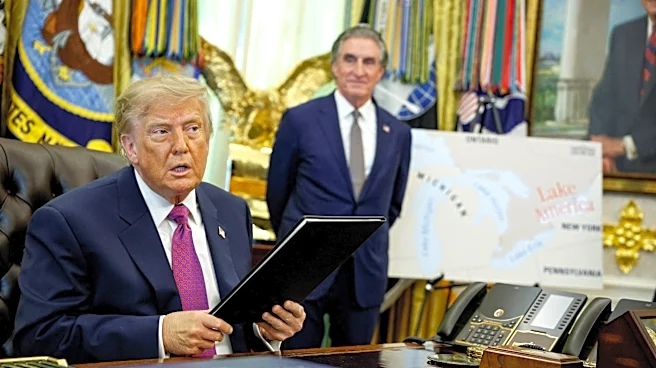
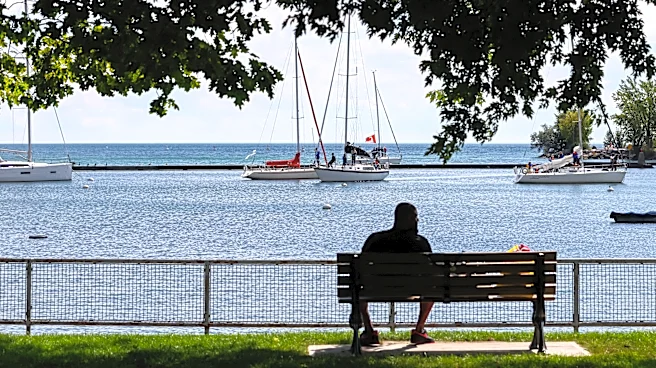
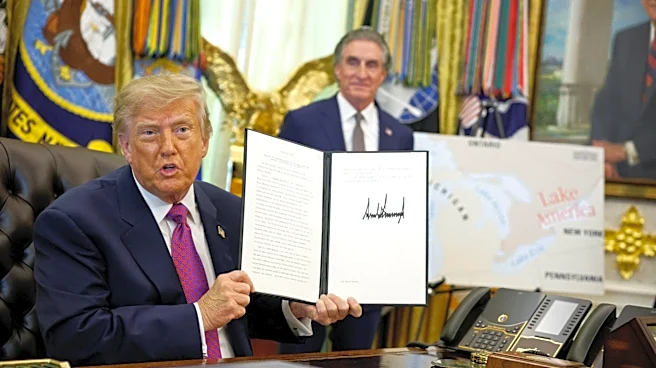
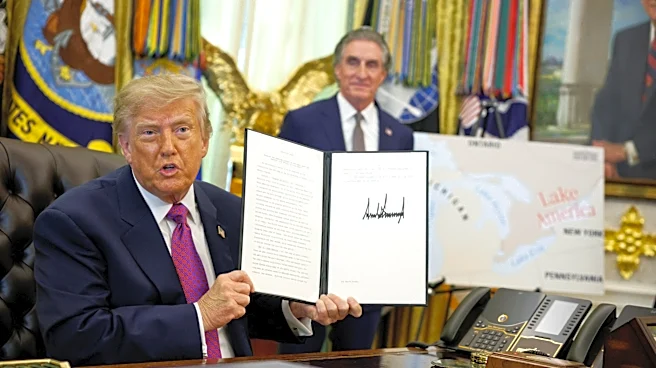
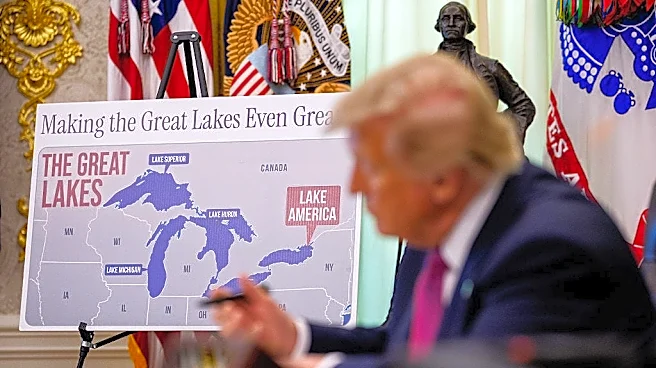
President Donald Trump publicly criticized New York Governor Kathy Hochul after she rejected the administration's proposed renaming of Lake Ontario to 'Lake America.' In a social media post on Friday, President Trump accused Governor Hochul of allowing
Canada to economically exploit New York and the United States. He reiterated his long-standing claim that Canada has been unfairly benefiting from trade and tariffs with the U.S. for decades. President Trump further asserted that Governor Hochul permits other countries and states to take advantage of New York, treating it like 'garbage.' He concluded his remarks by urging voters to support Republican gubernatorial candidates.
Why It's Important?
This public dispute highlights ongoing tensions between federal and state leadership, particularly when different political parties are involved. President Trump's comments underscore his consistent focus on trade imbalances and his perception of other nations taking advantage of the U.S. economy. The renaming of a significant natural landmark like Lake Ontario, and the subsequent rejection by a state governor, can become a symbolic battleground for political ideologies and state sovereignty versus federal influence. The accusation of economic exploitation by Canada, a major U.S. trading partner, could also impact cross-border relations and trade discussions, even if informally. For New York, the governor's stance reflects a potential resistance to federal directives that may not align with state interests or public sentiment, especially concerning cultural or geographical nomenclature. The call for voters to support Republican candidates also indicates a broader political strategy to influence state-level elections.
What's Next?
The immediate aftermath may see further political rhetoric from both sides, with Governor Hochul potentially responding to President Trump's accusations. The issue of the lake's name is likely to remain a point of contention, though the state's rejection suggests the proposed name change will not proceed. This incident could also fuel discussions about federal overreach versus state autonomy in naming conventions for natural landmarks. Economically, President Trump's remarks about Canada could resurface broader trade policy debates, potentially influencing future trade negotiations or discussions, although no immediate policy changes are indicated. Politically, this exchange might be leveraged by both parties in upcoming election cycles, with President Trump using it to rally his base and Governor Hochul using it to demonstrate her commitment to New York's interests against federal pressure. The focus on gubernatorial elections suggests that this issue could become a talking point in state political campaigns.
Beyond the Headlines
Beyond the immediate political sparring, this event touches upon deeper themes of national identity and regional pride. The renaming of a natural landmark often carries significant cultural and historical weight, and attempts to alter such names can be met with strong public and political resistance. The concept of 'Lake America' itself could be seen as an attempt to instill a particular nationalistic sentiment, which may clash with local or regional identities. Furthermore, the incident reflects the persistent challenge of federal-state relations, where differing priorities and political agendas can lead to public disagreements. The economic accusations against Canada, while not new from President Trump, highlight the ongoing debate about fair trade practices and the perceived impact of international agreements on domestic economies. This situation also exemplifies how social media platforms continue to be a primary channel for high-profile political figures to communicate directly with the public, often bypassing traditional media filters and potentially escalating disputes rapidly.