


What's Happening?
Federal immigration authorities have begun reducing their presence in Minneapolis, following a visit by Vice President JD Vance. The withdrawal involves approximately 700 U.S. Immigration and Customs Enforcement (ICE) and U.S. Customs and Border Protection
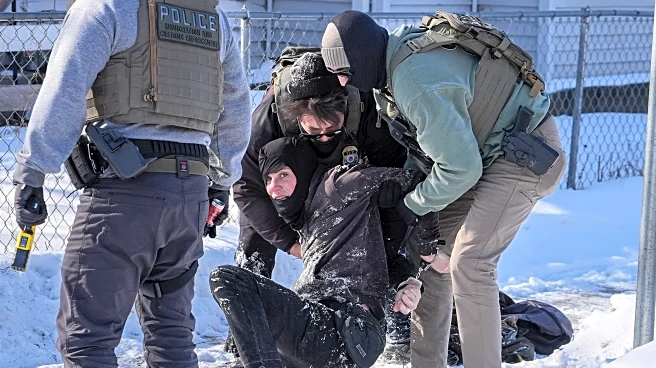
(CBP) agents. This move comes after Vance's visit on January 22, where he criticized Minnesota officials for not cooperating with federal immigration enforcement. The deployment of federal agents had sparked protests and legal challenges, particularly after the fatal shootings of two individuals, Renee Good and Alex Pretti, during enforcement actions. The Hennepin County medical examiner ruled Pretti's death a homicide, intensifying scrutiny on federal tactics. Despite the reduction, federal officials have stated that this is an operational adjustment rather than a full withdrawal, with about 2,000 federal personnel still active in the area.
Why It's Important?
The reduction of federal agents in Minneapolis highlights the ongoing tension between federal and local authorities over immigration enforcement. The presence of federal agents has been controversial, leading to protests and legal challenges from civil rights groups. The situation underscores the broader national debate on immigration policies and the role of federal enforcement in local jurisdictions. The incident has also raised questions about the use of force and the impact of federal operations on community trust, particularly in immigrant communities. The response from local and state officials, who have pushed back against federal claims of non-cooperation, reflects the complex dynamics between different levels of government in addressing immigration issues.
What's Next?
Federal operations in Minneapolis are expected to continue, albeit with a reduced number of agents. The Department of Homeland Security has indicated that the drawdown is a tactical shift, not a change in policy. Legal challenges from the state and civil rights groups are likely to persist, potentially influencing future federal enforcement strategies. The situation may also prompt further discussions on the balance of power between federal and local authorities in immigration matters. As protests continue, there may be increased pressure on federal agencies to reassess their approach and improve transparency and accountability in their operations.