



What's Happening?
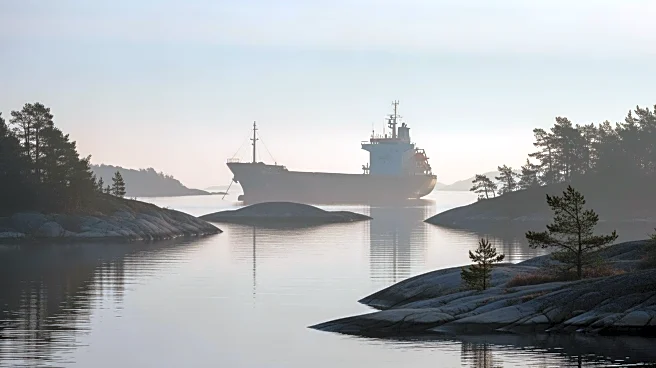
The Russian cargo ship Taimyr, owned by TC Nord Project, recently made a port call in Barentsburg, a Russian settlement on the Norwegian Arctic archipelago of Svalbard. The Taimyr, which has a deadweight of 12,150 tonnes, is sanctioned by the United States
and Ukraine due to its involvement in transporting Russian weapons. The ship departed from Murmansk on December 19, 2025, and arrived in Barentsburg on December 22, before returning to Murmansk four days later. The cargo onboard during this trip remains unspecified, but it is likely intended for Arktikugol, a Russian state-owned coal mining company operating in Barentsburg. Despite the sanctions from the US and Ukraine, neither the European Union nor Norway has imposed similar restrictions on TC Nord Project or its vessels.
Why It's Important?
The port call by the Taimyr highlights ongoing geopolitical tensions and the complexities of international sanctions. The presence of a sanctioned vessel in a Norwegian archipelago underscores the challenges in enforcing sanctions, especially in regions governed by international treaties like the Svalbard Treaty. This incident may strain diplomatic relations between Norway and its allies, particularly the US and Ukraine, who have imposed sanctions on the vessel's owner. Additionally, the continued operation of such ships in the Arctic region reflects Russia's strategic interests in maintaining and expanding its presence in the Arctic, which is rich in natural resources and holds significant geopolitical importance.
What's Next?
The situation may prompt discussions among NATO allies regarding the enforcement of sanctions and the implications of allowing sanctioned vessels to operate in international waters. Norway, as a member of NATO, might face pressure to align its policies with those of its allies. Furthermore, the incident could lead to increased scrutiny of maritime activities in the Arctic, potentially resulting in tighter regulations or new agreements to address the movement of sanctioned entities. The ongoing geopolitical tensions between Russia and Western nations are likely to influence future maritime operations and diplomatic engagements in the region.