
What's Happening?
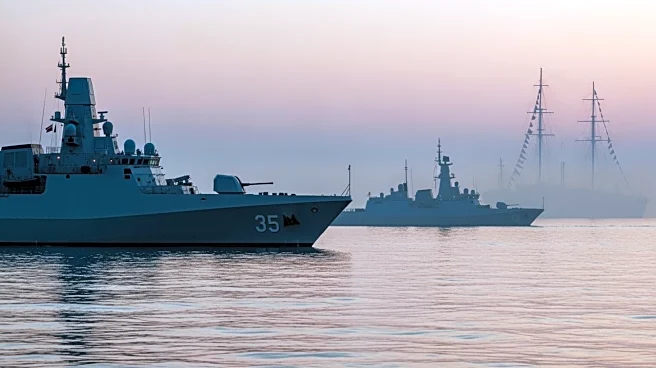
The Chinese-led naval exercise 'Will for Peace 2026' in Cape Town, South Africa, has encountered diplomatic issues due to the participation of Iranian warships. The exercise, which includes participants
from Russia, China, and the UAE, saw Iranian vessels initially taking an active role. However, the South African government requested that Iran reduce its participation to observer status, likely due to concerns over Iran's domestic human rights record and the potential impact on South Africa's trade relations with the U.S. under the African Growth and Opportunity Act. The exercise aims to practice naval drills for protecting commercial shipping lanes and is the first of its kind under the BRICS economic bloc.
Why It's Important?
This development highlights the complex geopolitical dynamics at play in international military collaborations. South Africa's decision to limit Iran's participation reflects the delicate balance countries must maintain between diplomatic relations and domestic policy considerations. The situation underscores the potential repercussions of military alliances on international trade agreements, particularly with major economic powers like the U.S. The exercise's challenges also illustrate the broader implications of aligning with countries that have contentious international standings, potentially affecting South Africa's global diplomatic and economic relationships.
What's Next?
Observers are closely monitoring the situation to see how it unfolds, particularly regarding the departure of Iranian vessels and the exercise's impact on South Africa's diplomatic standing. The outcome may influence future military collaborations and trade negotiations, especially as the African Growth and Opportunity Act comes up for renewal in the U.S. Congress. The exercise is scheduled to conclude on January 16, and its aftermath could prompt further diplomatic discussions and policy adjustments by the involved nations.