








What's Happening?
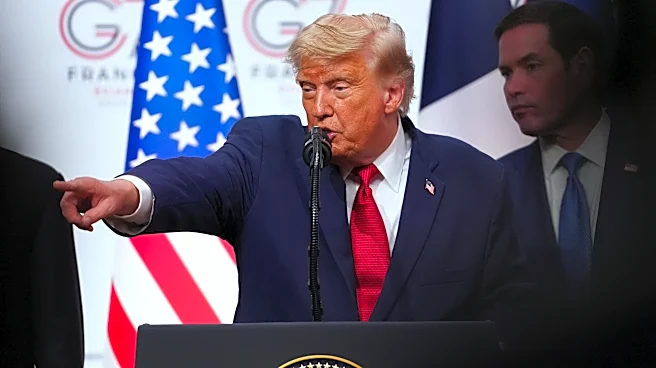
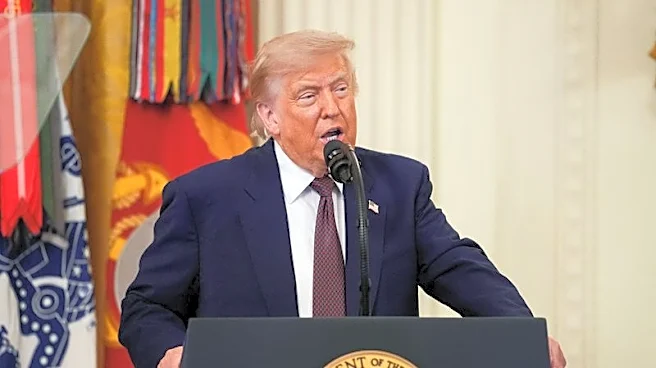
Nearly 17 months into President Donald Trump's second term, a new state-level polling map reveals a decline in his approval ratings across the United States. The data, sourced from Civiqs' rolling online tracking poll, includes responses from 111,661
registered voters. The analysis shows that Trump's approval ratings have weakened significantly since he returned to office on January 20, 2025. Nationally, Trump holds a 37% approval rating against a 58% disapproval, resulting in a net approval of -21. The state-by-state analysis indicates that while Trump maintains some support in Republican strongholds, his approval has notably decreased even in these areas. For instance, Wyoming, which was his strongest state, has seen a drop from +47 to +24. Swing states like Florida and Ohio have shifted from positive to negative net approval ratings, indicating a challenging political environment for Trump.
Why It's Important?
The decline in President Trump's approval ratings is significant as it could influence the political dynamics leading up to the 2026 midterm elections. With Trump underwater in every swing state, even minor shifts in voter sentiment could impact the control of Congress. The data highlights demographic divides, with younger voters and women showing strong disapproval, which could affect future electoral outcomes. The narrowing margins in traditionally Republican states suggest a potential shift in political allegiances, which could have long-term implications for the Republican Party's strategy and Trump's political influence.
What's Next?
As the 2026 midterm elections approach, the Republican Party may need to reassess its strategies to address the declining approval ratings of President Trump. The party could focus on strengthening its appeal in swing states and addressing the concerns of key demographic groups such as younger voters and women. Additionally, the White House may continue to emphasize Trump's 2024 election victory as a mandate for his agenda, despite the current polling challenges. The evolving political landscape will likely prompt both parties to adjust their approaches to maintain or gain control in Congress.
Beyond the Headlines
The decline in President Trump's approval ratings may also reflect broader societal shifts, including changing attitudes towards political leadership and policy priorities. The data underscores the importance of addressing issues such as economic inequality, healthcare, and education, which are critical to many voters. The Republican Party's response to these challenges could shape its future identity and influence its ability to attract a diverse voter base. Furthermore, the polling results may prompt discussions about the role of leadership and accountability in addressing national and global challenges.