






What's Happening?
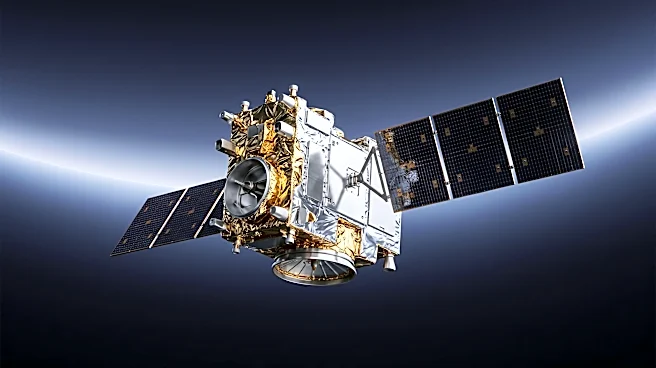
A recent US intelligence assessment from the Defense Intelligence Agency (DIA) warns that the Chinese People’s Liberation Army (PLA) is actively developing advanced weaponry capable of disabling American military satellites. These weapons pose a significant
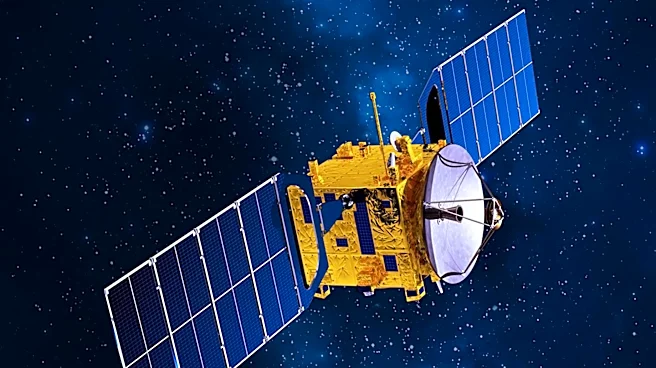
threat to US satellite networks, which are crucial for communications, surveillance, and precision strikes. The DIA states that the PLA's primary objective is space dominance, aiming to control the space-enabled information sphere and deny adversaries their own space-based information gathering and communication capabilities. The report highlights that China is developing space-based technology, including on-orbit counterspace weapons, designed to hold space systems at risk. Furthermore, Chinese forces already possess ground-based lasers that can interfere with or damage satellites in low Earth orbit. Unlike anti-satellite missiles, which create hazardous debris, directed energy weapons can temporarily disable or permanently damage satellite equipment. The DIA projects that by the late 2020s, China may deploy space-based directed energy systems and more powerful ground-based systems capable of threatening satellites in higher orbits. The PLA is also expected to expand its arsenal of anti-satellite missiles, potentially targeting spacecraft across low, medium, and high Earth orbits.
Why It's Important?
This development is critically important for U.S. national security and global strategic stability. The potential for China to disable or disrupt US military satellites could severely degrade American forces' operational capabilities, impacting everything from battlefield communications and navigation to intelligence gathering and precision targeting. This threat extends beyond direct military conflict, as civilian navigation, commercial communications, and other essential services rely heavily on satellite systems, making them vulnerable to disruption. The growth of China's intelligence, surveillance, and reconnaissance satellite network, which now exceeds 510 spacecraft, allows the PLA to monitor US military assets across the Indo-Pacific, providing a significant strategic advantage. The demonstrated ability of Chinese satellites to approach and reposition objects in space, as seen with the Shijian-21 satellite, raises concerns about potential interference with foreign spacecraft. This arms race in space could lead to increased instability, forcing the U.S. to invest more heavily in resilient space architectures and defensive capabilities, potentially escalating military spending and international tensions.
What's Next?
In response to these warnings, the United States will likely accelerate its efforts to enhance the resilience and security of its satellite infrastructure. This could involve developing more robust satellite systems, diversifying communication pathways, and investing in defensive counterspace capabilities. International diplomatic efforts may also intensify to establish norms and regulations for space conduct, aiming to prevent the weaponization of space and reduce the risk of conflict. The DIA's findings, published in 'Challenges to Security in Space 2026: Congestion, Competition, and Cooperation,' will likely inform U.S. defense policy and strategic planning for years to come. Continued monitoring of China's space capabilities and intentions will be crucial. The U.S. military and intelligence communities will need to adapt to this evolving threat landscape, potentially leading to new doctrines for space warfare and increased collaboration with allies to protect shared space assets. The development of countermeasures and defensive technologies will be a priority to maintain the U.S. advantage in space.
Beyond the Headlines
The implications of China's counterspace weapon development extend beyond immediate military concerns, touching upon broader ethical and legal dimensions of space. The potential for directed energy weapons to cause reversible or non-reversible effects on satellites introduces a new layer of complexity to international law regarding the use of force in space. The creation of space debris from anti-satellite missile tests, as demonstrated by China in 2007, poses a long-term threat to all spacefaring nations, increasing the risk of collisions and rendering parts of orbit unusable. This raises questions about accountability for space debris and the need for international agreements on responsible space behavior. Furthermore, the dual-use nature of some space technologies means that advancements in satellite servicing or debris removal could also be adapted for offensive purposes, blurring the lines between peaceful and military applications. This ongoing competition could trigger a long-term shift in global power dynamics, where control over space assets becomes as critical as traditional land, sea, and air superiority, fundamentally altering geopolitical strategies and alliances.