



What's Happening?
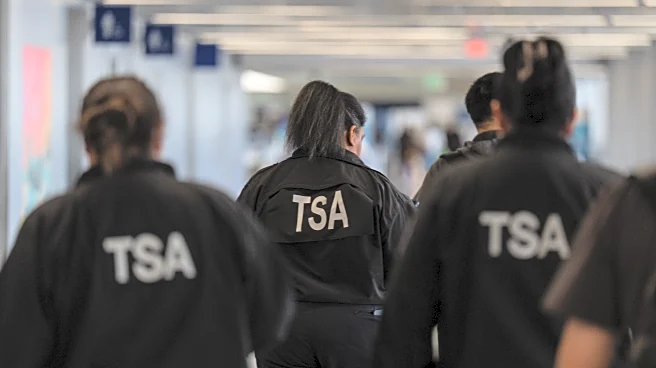
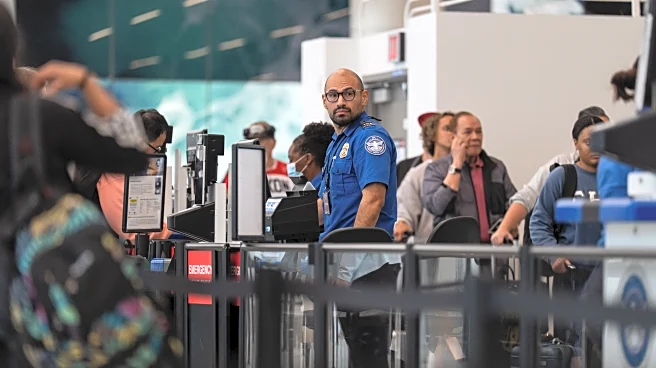
The Department of Homeland Security (DHS) is experiencing a partial government shutdown due to Congress's failure to agree on a funding bill. This impasse has resulted in nearly 92% of DHS's 272,000 employees continuing to work without pay. The shutdown began
on February 14, and there is no resolution in sight as lawmakers are on a break for Easter and Passover. While some DHS employees, particularly those involved in immigration enforcement, are being paid through funds from a previous budget, many others, including Federal Emergency Management Agency workers and Coast Guard civilians, are not receiving compensation. The situation has led to significant financial strain on affected employees, with the American Federation of Government Employees highlighting the lack of relief for many DHS staffers.
Why It's Important?
The ongoing shutdown and funding disputes have significant implications for national security and the well-being of DHS employees. The lack of a funding agreement affects the department's ability to operate effectively, potentially compromising its mission to protect the homeland. The financial strain on employees could lead to decreased morale and productivity, impacting the department's overall efficiency. Additionally, the shutdown highlights broader political challenges, as disagreements between the House and Senate, as well as within the Republican party, continue to stall progress. The situation underscores the need for a resolution to ensure the stability and functionality of critical government operations.
What's Next?
As lawmakers remain on break, the immediate future of the funding impasse remains uncertain. The resolution of the shutdown will depend on Congress's ability to reach a consensus on funding levels for DHS. In the meantime, affected employees and their families face ongoing financial uncertainty. The situation may prompt increased pressure on lawmakers to prioritize a resolution, especially as public attention and criticism grow. The outcome of these negotiations will have lasting effects on DHS operations and employee welfare.